 Español
 Français
Perceptions of the Four Seasons in Tứ Quý Painting
- on Jan 15, 2026 By: Trang Nhung NGUYEN
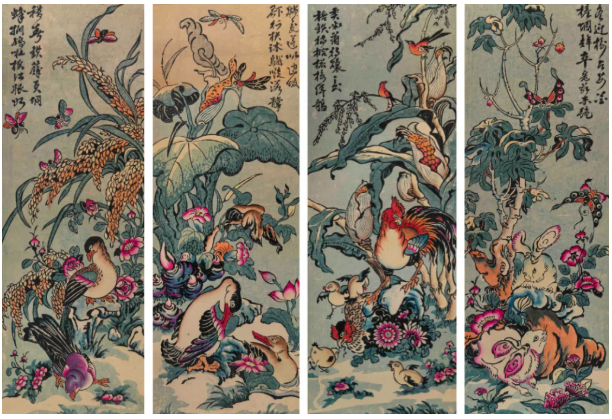
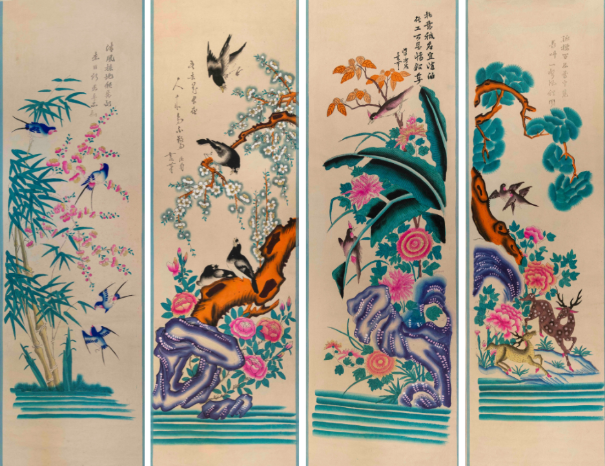
The Tứ Quý painting is a type of auspicious artwork composed of four panels symbolizing the four seasons: spring, summer, autumn, and winter. In ancient tradition, at each Tết festival (Lunar New Year), when spring returned, Vietnamese families used to renovate their homes, hang a Tứ Quý painting, or offer one of these artworks to relatives or friends. These paintings often feature verses written in Chinese characters or in chữ Nôm (traditional Vietnamese script), celebrating the seasons of the year or expressing wishes for happiness.
A Tứ Quý painting is displayed with the intention of wishing family members blessings, longevity (living through the four seasons and completing a full life cycle), a peaceful, prosperous, and honorable life, as well as a flourishing lineage.
Meaning and symbolism of the Tứ Quý painting
The Tứ Quý painting does more than simply depict the seasons; it also conveys deep aspirations within Vietnamese culture. Traditionally, people believed that displaying an artwork representing the four seasons could attract good fortune, serenity, prosperity, and longevity to the household.
In certain collections of traditional Vietnamese paintings, Tứ Quý series include compositions in which each panel illustrates a season through natural symbols such as flowers, fruits, birds, or trees associated with spring, summer, autumn, or winter. These images reflect the harmony between humans and nature, as well as the balance of time and life.
Examples of famous Tứ Quý paintings
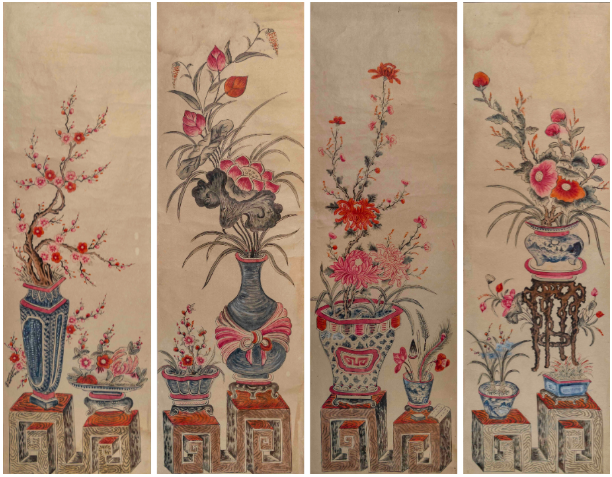
In the collection of the Vietnam Fine Arts Museum, there are several representative Tứ Quý painting series belonging to popular artistic traditions such as Hàng Trống and Đông Hồ paintings.
One Tứ Quý series in the Hàng Trống style depicts four flower vases—peach blossoms, lotus, chrysanthemum, and camellia—corresponding respectively to the four seasons. The arrangement of these vases and the surrounding decorative objects symbolically illustrates harmony and wishes for peace and prosperity.
Another example in the same style features fruits associated with the seasons:
peach blossoms in spring,
lychees in summer,
pomegranates in autumn,
custard apples (na fruit) in winter.
Each plant or fruit carries traditional meanings such as longevity, good fortune, or abundant descendants.
Tứ Quý painting in cultural life
The Tứ Quý painting holds an important place in Vietnamese festive traditions, especially during Tết. It is not only a form of decorative art but also a cultural symbol deeply rooted in the hearts of Vietnamese people.
Even today, these artworks appear in museum collections and are studied as remarkable examples of traditional Vietnamese art representing the four seasons and human values.
Conclusion
The Tứ Quý painting is not merely an artistic representation of the four seasons; it also embodies profound cultural values linked to wishes for happiness, prosperity, and longevity. As an integral part of Vietnam’s visual heritage, the Tứ Quý painting continues to be a source of inspiration and beauty in traditional Vietnamese art.
Share


Comment
Other Blog

Categories
Latest News


on 12 Jun, 2019




MichaelGuiffSH
on Oct 8, 2026BetongameCZ
on Sep 24, 2026Langsweirt Galliane
on Sep 21, 2026Victoria Duncan
on Sep 1, 2026Kaushik Ghosh
on Aug 30, 2026