 Español
 Français

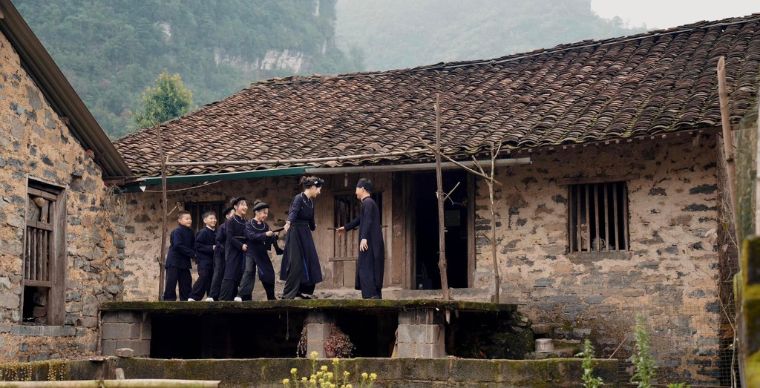
Na Vi Ancient Stone Village - A Hidden Gem in Cao Bang
- on Nov 13, 2026 By: Huong Thao NGUYEN
Na Vi Ancient Stone Village, nestled in the mountains of Cao Bang, is a lesser-known Tay ethnic village known for its centuries-old stone houses. Beyond its unique architecture, it offers a glimpse into traditional Tay culture and rural life in northern Vietnam. What makes Na Vi worth visiting, and how can you include it in your Cao Bang travel itinerary? Discover more with Authentik Vietnam, a local travel agency in Vietnam.
- 1. Where is Na Vi Ancient Stone Village located?
- 2. What makes Na Vi different from other villages in Cao Bang?
- 3. Are the stone houses in Na Vi still inhabited?
- 4. What cultural traditions can visitors learn about in Na Vi Ancient Stone Village?
- 5. Is Na Vi Ancient Stone Village a developed tourist destination?
- 6. When is a good time to visit Na Vi?
- 7. What should visitors keep in mind when exploring Na Vi Ancient Stone Village?
I. Why Discover Na Vi, a Lesser-Known Stone Village in Cao Bang?
When people think of stone villages in Cao Bang, Khuoi Ky is often the first name that comes to mind. Located close to Ban Gioc Waterfall and Nguom Ngao Cave, Khuoi Ky has become a popular stop on the province's eastern tourism route. Its traditional Tay stone stilt houses, recognition as a cultural village in 2008 and the development of community-based tourism have helped establish its reputation among travellers.
Na Vi, by comparison, remains much less familiar to visitors. Yet it shares an equally interesting connection with stone architecture. Located in the former Minh Long area, now part of Ly Quoc Commune, Na Vi is home to traditional stone houses that reflect the Tay people's adaptation to their mountainous surroundings.
What makes Na Vi worth discovering is not simply the age of its houses. Unlike a village primarily experienced as a tourism destination, Na Vi remains a residential community where traditional architecture, farming and cultural practices are closely connected to everyday life. Visitors can discover another side of Tay heritage through its old houses, handloom weaving, indigo clothing and Then singing.
1. Where Is Na Vi Ancient Stone Village?
Na Vi lies at the foot of Phja Cao Mountain, around 100 kilometres from Cao Bang City, in a mountainous area near the Quay Son River. The surrounding landscape consists of hills, agricultural land and small rural settlements.
The village is home to the Tay people, one of Vietnam's major ethnic groups. Their cultural identity is reflected in the architecture, traditional clothing, music and everyday activities that continue to shape life in Na Vi.
2. A Village Shaped by Its Natural Surroundings
The mountainous landscape has influenced how people in Na Vi have built their homes and organised their lives. Stone from the surrounding mountains became an important local building material, while nearby fields provide land for growing rice, maize and other crops.
For generations, residents have adapted to the conditions of the area, making use of available materials and maintaining a way of life closely connected to the land.
II. The Ancient Stone Houses of Na Vi
1. Architecture built with local stone
The most distinctive feature of Na Vi is its traditional stone houses. But why did the Tay people here choose stone as their main building material?
The answer lies partly in the surrounding landscape. With stone readily available in the nearby mountains, local families made use of this natural resource to build durable homes suited to their environment. Thick stone walls also provide protection from the elements and help maintain a more stable indoor temperature throughout the changing seasons.
Many of these houses are estimated to be around 100 to 150 years old. Their walls were built by carefully arranging stones and binding them with a mixture of lime and sand. Some walls are approximately 30 centimetres thick, while the houses can reach 7 to 8 metres in height. Constructing a traditional three-room house could take one to two years, reflecting the considerable labour and building skills involved.
Although stone is the defining material, these houses are not entirely made of stone. Timber remains an important part of their structure, particularly in the upper living areas and roof framework. Traditional yin-yang roof tiles complete the appearance of many houses.
2. A practical design for mountain life
The architecture reflects the practical needs of families living in a mountainous environment. In some traditional two-storey houses, the ground floor was used for storing agricultural tools or keeping livestock, while the upper floor served as the main living space.
The thick stone walls also provide protection and help regulate indoor temperatures. More than a decorative choice, stone construction represents a building method developed in response to local conditions.
Signature thick stone walls of Na Vi’s house in Cao Bang
Some houses have been passed down through three or four generations. Their continued presence offers a glimpse into how families have maintained their homes and adapted them over time.
3. Preserving Na Vi's Stone Houses
The value of Na Vi's stone houses can also be seen in how many have retained their original architectural features. According to a report published in July 2022, the village had 40 stone houses preserving around 80% of their original structure, while another 50 retained approximately 50–60% of their traditional features.
A later report by Cao Bang Newspaper documented 56 old stone houses that remained intact in their traditional architectural style. These figures reflect the village's continuing efforts to maintain its distinctive built heritage, although they refer to different reporting periods and assessment criteria.
For local families, preservation is part of everyday life. When sections of a house are damaged, residents have traditionally repaired them using locally sourced stone and familiar building techniques. This ongoing maintenance has helped keep many old houses in use, allowing their architectural heritage to remain connected to the lives of the people who inhabit them.
III. Everyday Life at Na Vi village of Tay people in Cao Bang
1. Agriculture as the foundation of village life
Despite the attention given to its stone architecture, Na Vi remains first and foremost an agricultural community. Farming continues to play an important role in the local economy and shapes the rhythm of everyday life.
Rice, maize, beans and vegetables are among the crops grown by local households. Families also raise animals such as buffaloes, pigs and poultry, supporting both household consumption and their livelihoods.
The agricultural calendar influences daily routines, from preparing the fields and planting crops to harvesting and storing food. These activities are closely connected to the surrounding landscape and the changing seasons.
2. Family life across generations
Traditional houses in Na Vi are not preserved as museum exhibits. They are still places where people cook, work, welcome relatives and raise children.
In some families, several generations have lived under the same roof. This continuity helps explain why the houses remain meaningful to the community: they are connected not only to architectural history but also to family memories and everyday experiences.
For visitors, observing village life can offer a more grounded understanding of rural northern Vietnam than simply viewing the houses from the outside.
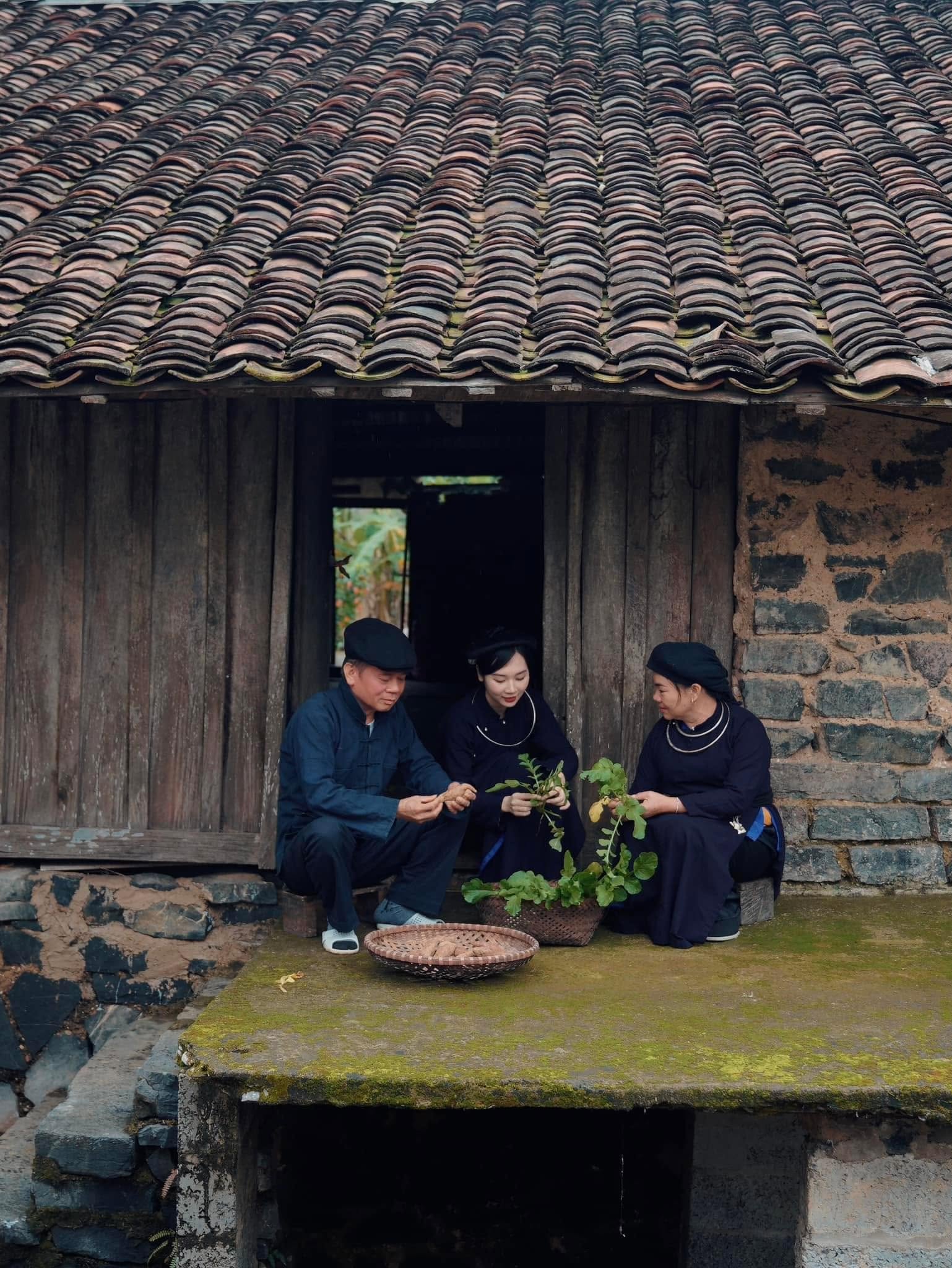
A family tradition: generations living together under one roof in Na Vi.
IV. Tay Cultural Traditions in Na Vi
1. Traditional weaving and indigo clothing
Handloom weaving is one of the traditional crafts associated with Tay culture. In Na Vi, some local women continue to practise this craft, producing textiles that reflect skills passed down through generations.
The process involves several stages, from preparing the fibres and weaving the fabric to dyeing it. Indigo is particularly associated with traditional clothing worn by Tay communities in the region.
Although weaving is no longer part of every household's daily routine, its continuation helps preserve practical knowledge and a cultural identity expressed through clothing and handmade textiles.
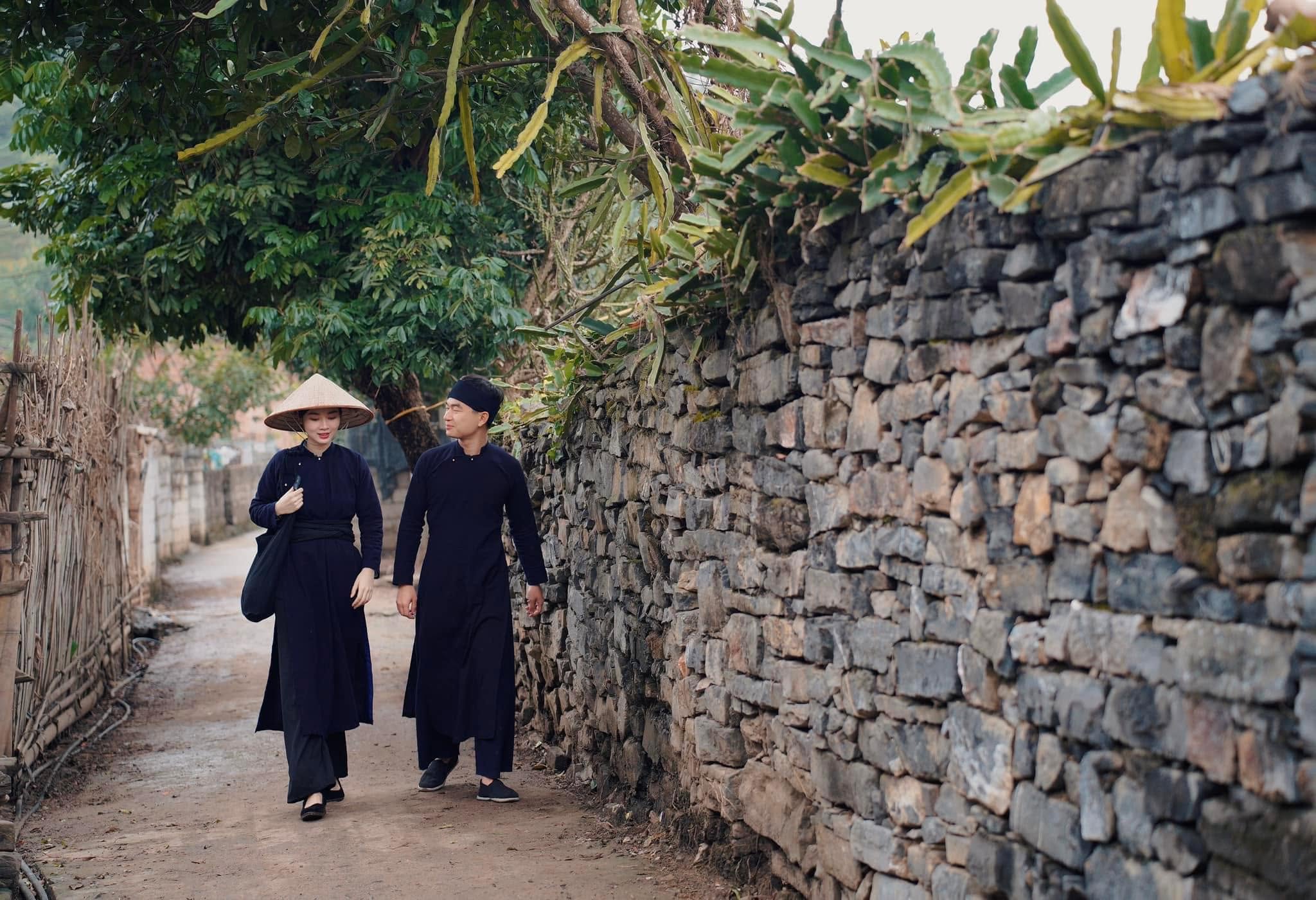
Traditional indigo clothing worn by the Tay people in Na Vi.
2. Then singing and the dan tinh lute
Music is another important part of Tay cultural life. One of the best-known traditional art forms is Then singing, often accompanied by the dan tinh, a traditional string instrument.
Then is more than a form of folk entertainment. It is closely connected to the spiritual beliefs and ritual practices of Tay communities. Through its melodies and lyrics, it conveys stories, wishes and ideas about the relationship between people, nature and the spiritual world.
In Na Vi, local efforts have helped keep this tradition alive. A Then and dan tinh club was established in 2020, bringing together residents interested in practising and passing on this cultural heritage.
V. FAQs About Na Vi Ancient Stone Village
1. Where is Na Vi Ancient Stone Village located?
Na Vi Ancient Stone Village is located in Ly Quoc Commune, Cao Bang Province, in northern Vietnam. It lies at the foot of Phja Cao Mountain, around 100 kilometres from Cao Bang City.
2. What makes Na Vi different from other villages in Cao Bang?
Na Vi Ancient Stone Village is particularly known for its traditional stone houses, some of which are estimated to be 100 to 150 years old. The village also preserves elements of Tay cultural life, including traditional weaving, Then singing and dan tinh music.
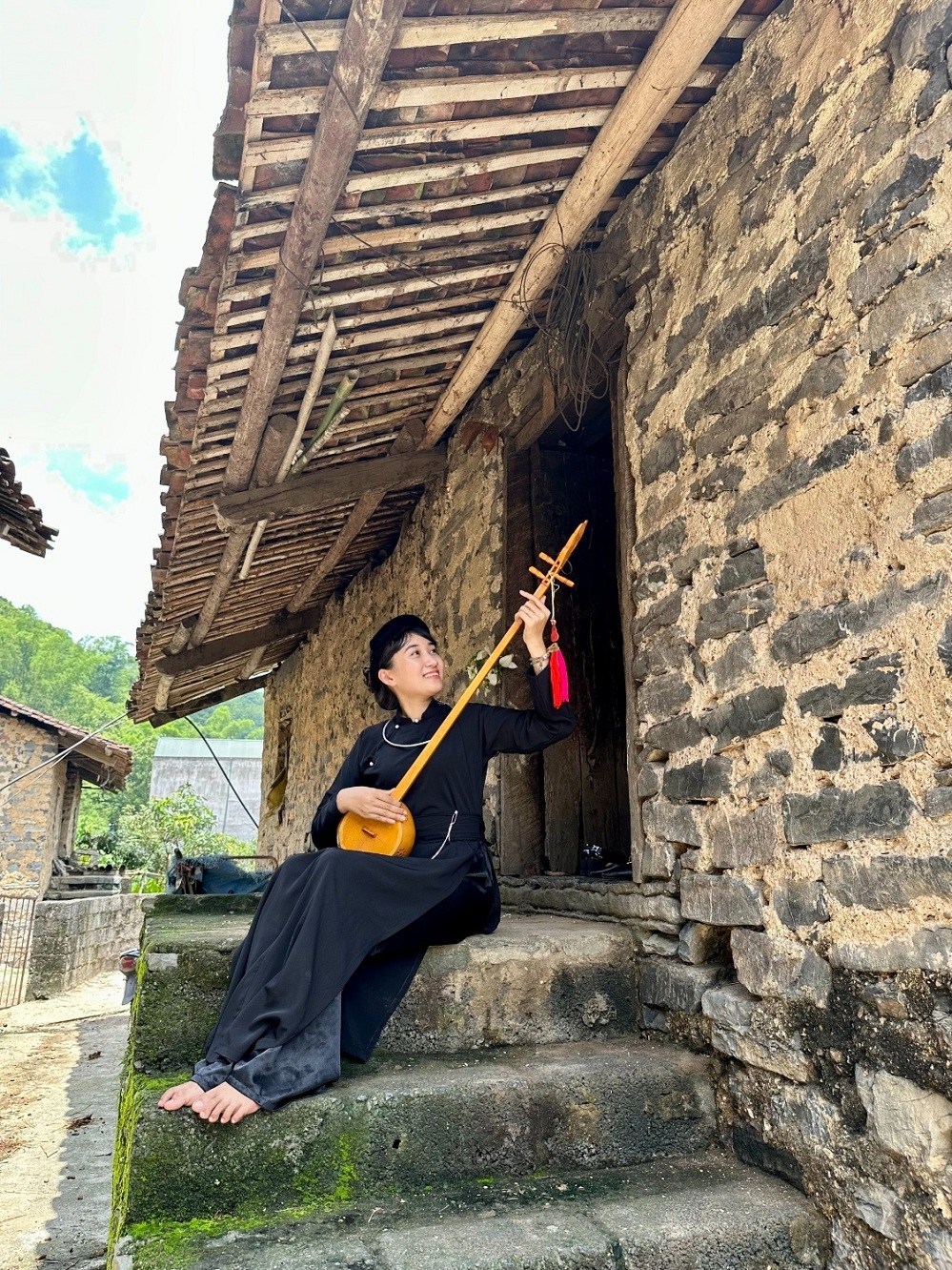
Have you ever heard the sound of a dan tinh?
3. Are the stone houses in Na Vi still inhabited?
Yes. Na Vi Ancient Stone Village is a living residential village, not an open-air museum. Many traditional houses remain part of the local community, although their condition and degree of preservation vary.
4. What cultural traditions can visitors learn about in Na Vi Ancient Stone Village?
When visiting Na Vi in Cao Bang, visitors can discover aspects of Tay culture, including traditional indigo clothing, handloom weaving, Then singing and the dan tinh lute. The availability of opportunities to observe these activities depends on local residents and their schedules.
5. Is Na Vi Ancient Stone Village a developed tourist destination?
No. Na Vi remains a relatively lesser-known village rather than a fully developed tourist destination. Visitors should not assume that there are regular performances, organised craft workshops, restaurants or homestays available. It is best to check local arrangements in advance.
6. When is a good time to visit Na Vi?
The village can be visited throughout the year. The surrounding landscape changes with the agricultural seasons, offering different views of the fields and mountains. Visitors may wish to consider the weather and road conditions in Cao Bang when planning their journey.
7. What should visitors keep in mind when exploring Na Vi Ancient Stone Village?
Na Vi is home to local families, so visitors should respect private spaces, ask before taking photographs and avoid entering houses without permission. A considerate approach helps ensure that cultural discovery does not interfere with everyday life.
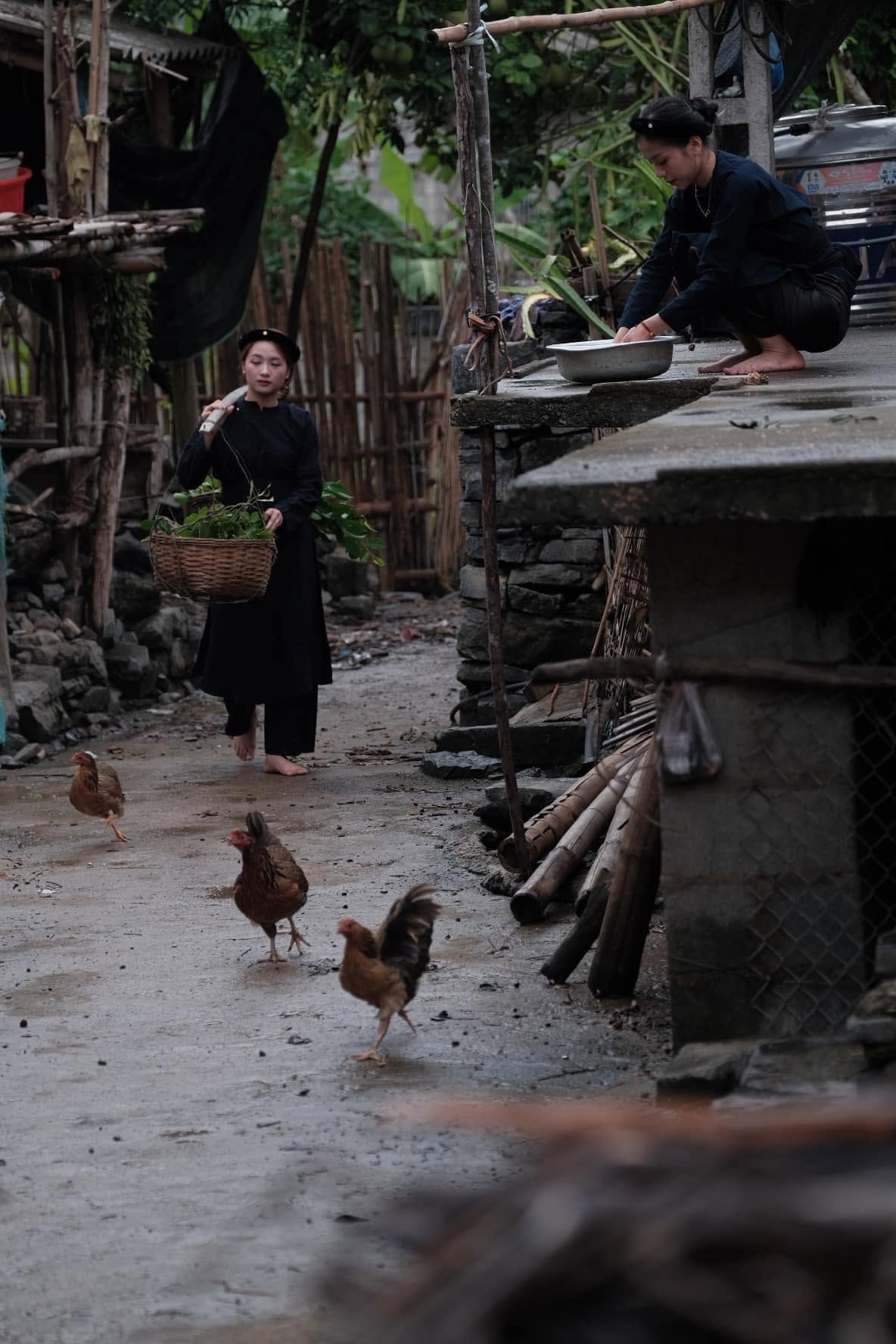
A gloomy day in Na Vi, Cao Bang
VI. CONCLUSION
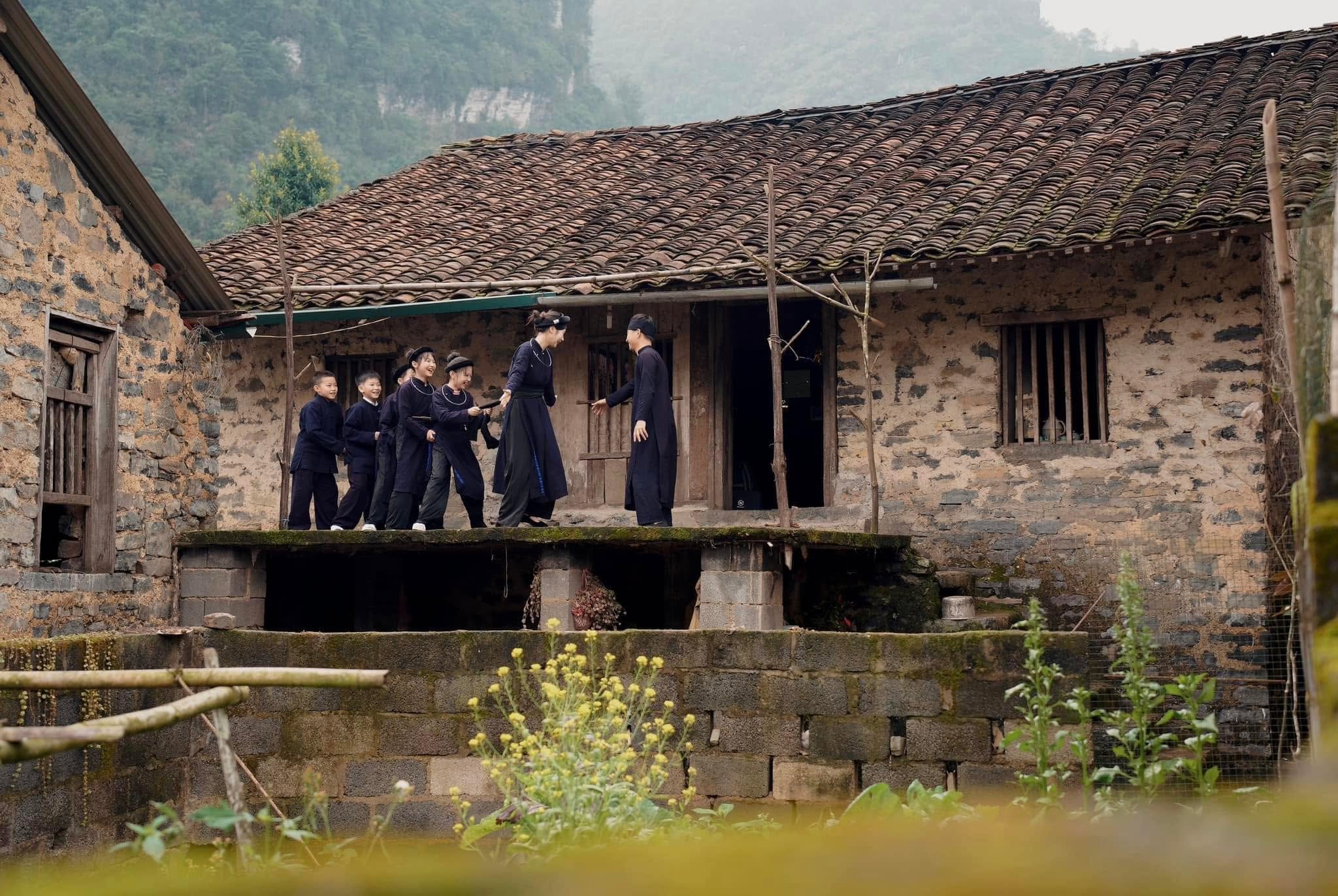
A must-visit place in Cao Bang - Na Vi Ancient Stone Village
Na Vi Ancient Stone Village offers a different perspective on Cao Bang, where centuries-old stone houses, Tay traditions and everyday rural life remain closely connected. For travellers looking beyond the region's famous attractions, it is a worthwhile stop to discover another side of northern Vietnam.
To explore more of the region, take a look at our Northeast Vietnam 5 Days itinerary, featuring the landscapes, ethnic communities and lesser-known destinations of Northeast Vietnam. As a local travel agency in Vietnam, Authentik Vietnam can also help tailor your journey to include places that match your interests and travel pace.
Read more:
>> Lam Thuong Valley, Yen Bai: The Hidden Tay Village Between Sapa and Ha Giang
>> Hidden Cultural Gems in Cao Bang Vietnam: 5 Craft Villages in Quang Uyen
>> Explore Khuoi Khon: A Hidden Treasure in the Mountains of Cao Bang
Share


Comment
Other Blog




Categories
Latest News


on 12 Jun, 2019




MichaelGuiffSH
on Oct 8, 2026BetongameCZ
on Sep 24, 2026Langsweirt Galliane
on Sep 21, 2026Victoria Duncan
on Sep 1, 2026Kaushik Ghosh
on Aug 30, 2026