 Español
 Français

Lam Thuong Valley, Yen Bai: The Hidden Tay Village Between Sapa and Ha Giang
- on Jun 16, 2026 By: Thai An Le
What Is Lam Thuong Valley?
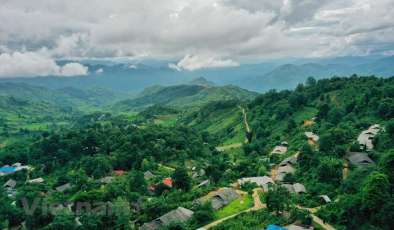
Lam Thuong is a remote valley in Luc Yen District, Yen Bai Province, located roughly 250 km from Hanoi. Nestled between karst limestone peaks and emerald rice paddies, it is home to the Tay ethnic minority, one of Vietnam’s oldest highland communities. Unlike the tourist-heavy trails of Sapa or the dramatic passes of Ha Giang, Lam Thuong remains genuinely off the beaten path: no souvenir shops, no tour buses, no Instagram crowds. Just palm-thatched stilt houses, crystal-clear mountain streams, and a community that welcomes strangers as guests.
In short: Lam Thuong is the kind of place seasoned travelers spend years looking for.
Quick Facts
- Location: Luc Yen District, Yen Bai Province, Northern Vietnam
- Distance from Hanoi: ~250 km (approx. 5 hours by car)
- Best time to visit: May–June (lush green) or September–October (harvest gold)
- Who it’s for: Slow travelers, cultural explorers, eco-tourism seekers
- Budget: Homestays range from approximately $7 USD per night for a dormitory bed to $29–35 USD per night for a private room with breakfast.
Why Visit Lam Thuong? (And Not Just Another Northern Vietnam Destination)
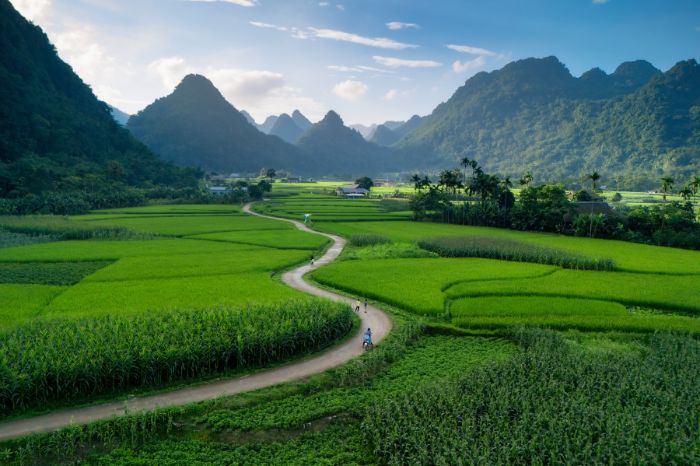
Most travelers do a version of the same northern Vietnam loop: Hanoi → Sapa → Ha Giang. Lam Thuong sits geographically between these two, and culturally, it offers something neither can.
- Sapa has commercialized. Trekking routes are busy, villages feel staged.
- Ha Giang is spectacular but intense — steep passes, dramatic landscapes, little time to slow down.
- Lam Thuong is the pause between the two. It’s where you bike along rice field paths at 7am, share a meal cooked over a wood fire, and spend an afternoon learning bamboo weaving from an artisan who has done it for 40 years.
It also sits directly on the road between Bac Ha and Ha Giang, making it a natural and deeply rewarding stop rather than a detour.
Things to Do in Lam Thuong Valley
1. Walk or Cycle Through the Tay Villages
The villages of Tong Pang, Tong Binh Cai, and Ban Choi are best explored slowly, only on foot or by bicycle. The paths wind between rice paddies and wooden stilt houses, many of which are over 50 years old. You’ll pass families working in the fields, water buffaloes resting by streams, and children playing traditional spinning-top games (con quay) in the village square.
This is not organized tourism. It’s daily life — and you’re invited to witness it.
2. Visit Mr. Dai and Hear Thuong Can Folk Singing
One of Lam Thuong’s most memorable experiences is a visit to Mr. Dai, an elder respected as a keeper of Tay cultural heritage. He opens his traditional stilt house to visitors to demonstrate Thuong Can, which is a rare form of Tay folk singing that blends poetry, melody, and storytelling. Few travelers ever hear it. Fewer still get to hear it in the home where it has been practiced for generations.
3. Try Bamboo Weaving with a Local Artisan
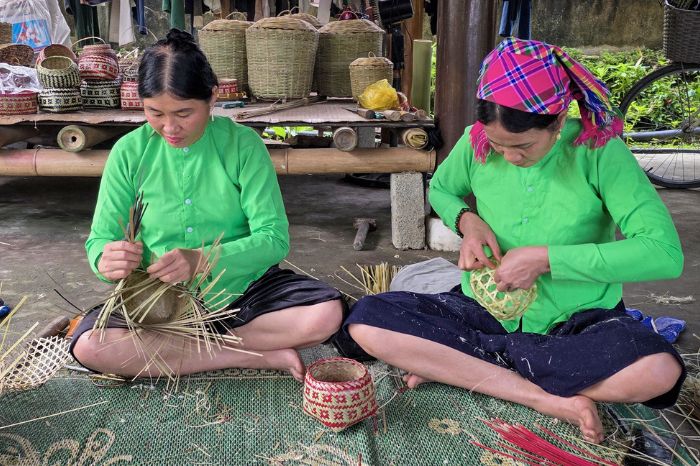
Lam Thuong families practice bamboo weaving as both craft and livelihood. You can join a hands-on session and leave with a small handmade item such as a basket, a small tray which is created with your own hands and the guidance of someone who has spent a lifetime mastering the technique.
4. Trek to Nam Chan Waterfall and Khuoi Luong Stream
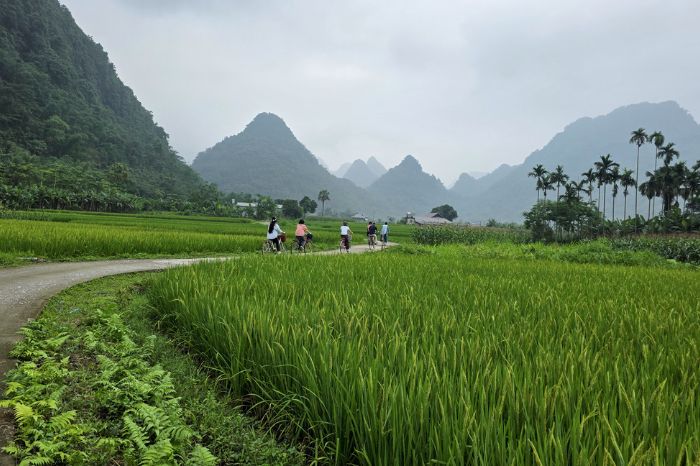
A few kilometers from the valley center, Nam Chan Waterfall and Khuoi Luong Stream offer some of the most beautiful and unspoiled natural scenery in northern Vietnam. The stream runs cool and clear year-round, and it's perfect for a swim on a warm afternoon. The surrounding forest feels untouched, and the trek is accessible even for casual walkers.
5. Explore the Luc Yen Gemstone Market (Optional Day Trip)
About 30 km away, Luc Yen hosts one of Vietnam’s most unusual markets: a busy trade in raw gemstones such as rubies, sapphires, and spinels, mined locally and sold in informal clusters along the street. It’s a fascinating detour that most tourists never know exists.
Tay Food: What to Eat in Lam Thuong
Meals at a Lam Thuong homestay are among the best in northern Vietnam — not because they are elaborate, but because everything is grown steps from your table.
Lam Thuong duck is the local specialty: free-range ducks raised along the streams, grilled over charcoal until the skin crisps and the meat stays tender and fragrant. It’s the kind of dish you don’t forget.
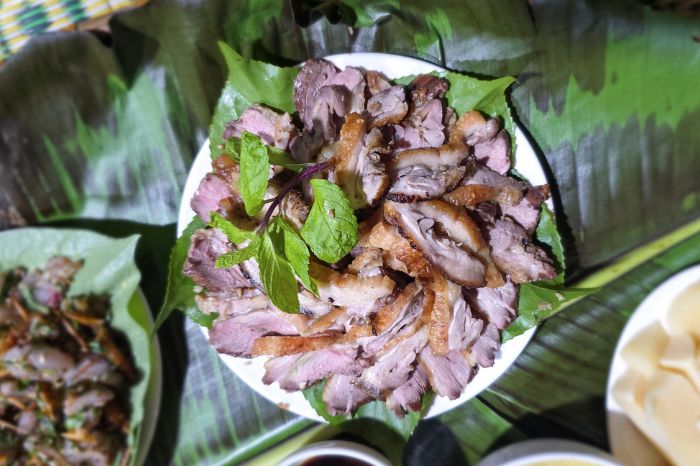
Stream fish wrapped in banana leaves: cooked slowly over an open flame, the fish picks up a gentle smokiness while remaining delicate and firm.
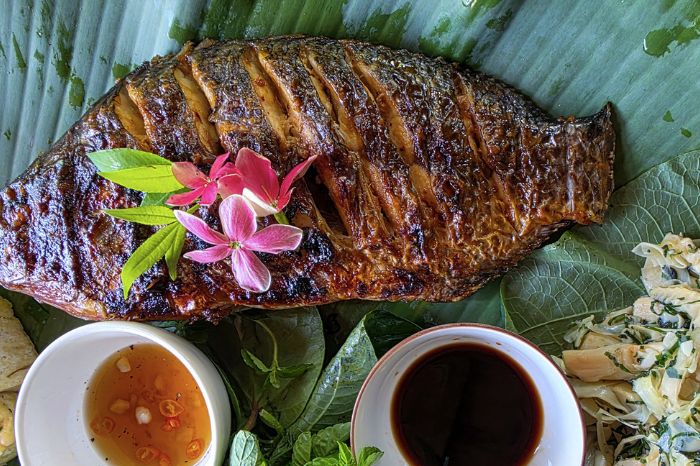
Wild rock moss is the most surprising dish: moss collected from stream beds, cleaned and mixed with local herbs (spring onion, ginger, lemongrass), then steamed slowly under hot ash. It sounds unusual. It tastes extraordinary.
Every ingredient comes from the family’s garden, pond, or the stream behind the house. Meals are communal, unhurried, and can be one of the most meaningful moments of any trip to Vietnam if you’re open to the experience.
Where to Stay in Lam Thuong
Xoi Farmstay, Tong Pang Village
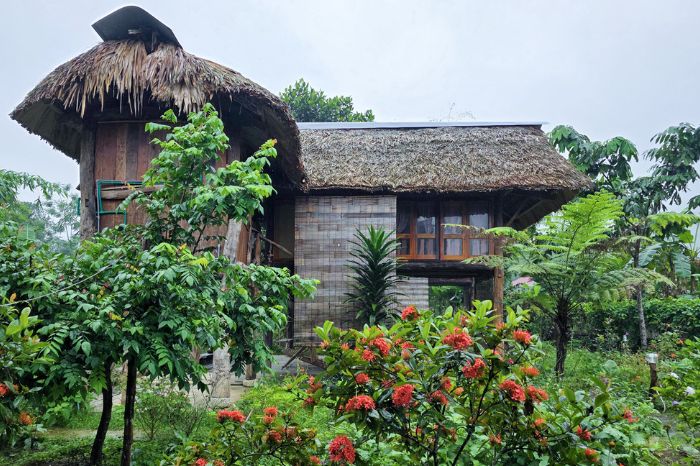
Founded by Ms. Xoi, a young Tay woman passionate about responsible tourism, this is one of Lam Thuong’s pioneering eco-friendly homestays. Located beside the rice paddies, it offers a beautiful natural setting and genuine local hospitality.
Ngot Homestay, Tong Pang Village
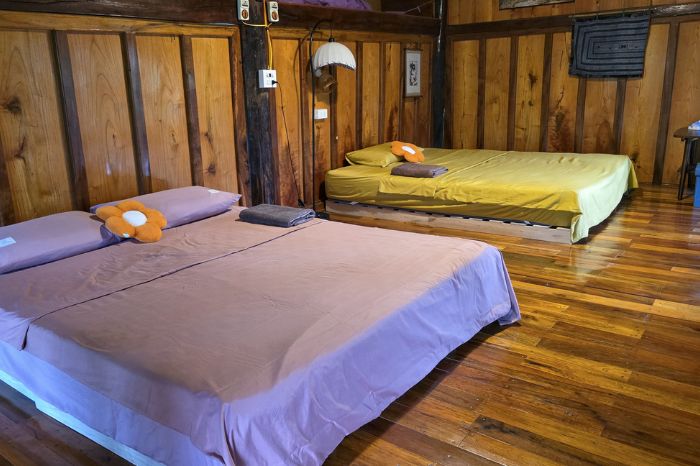
The word ngọt means “sweet” in Vietnamese, a fitting name for this charming homestay. Thoughtfully decorated and full of character, it is run by welcoming hosts who make guests feel at home from the moment they arrive.
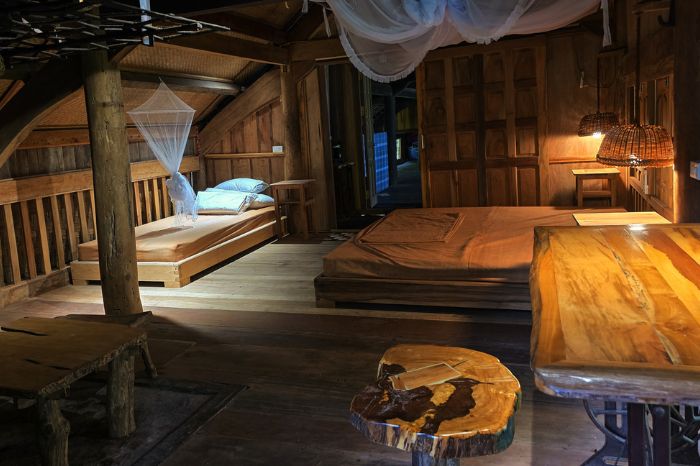
Napong Ecolodge, Na Phong Village
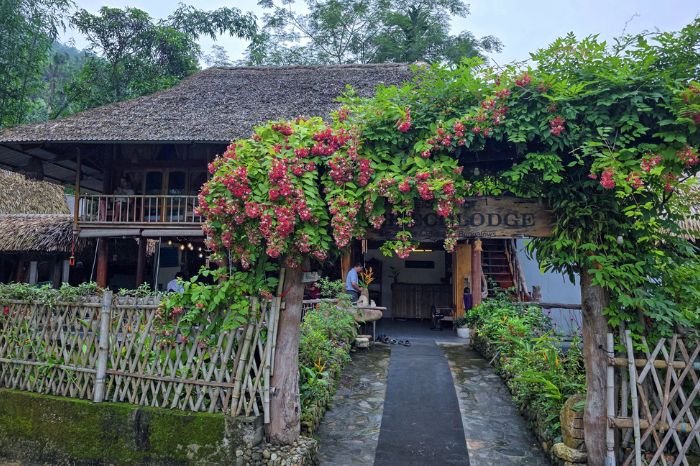
For travelers seeking a more comfortable stay while still enjoying an authentic local experience, Napong Ecolodge is an excellent choice. Traditional wooden architecture, quality service, and a peaceful valley location make it one of the most comfortable accommodations in Lam Thuong.
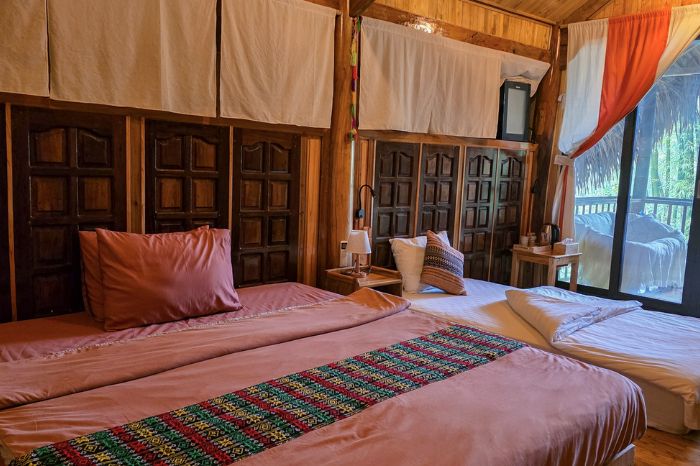
Price Range
Approximately $7 USD per night for a shared dormitory and $29–35 USD per night for a private room with breakfast.
Best Time to Visit Lam Thuong
May to June: The valley is intensely green. Rice seedlings fill the paddies, waterfalls run full, and the weather is fresh rather than hot. Ideal for trekking and photography.
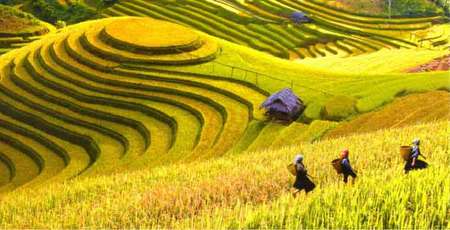
September to October: Harvest season transforms Lam Thuong into a golden landscape. The temperature drops to a comfortable level for walking, and the cultural energy of harvest time makes community interactions especially memorable.
Avoid July–August if possible: monsoon rains can make roads difficult and reduce visibility.
How to Get to Lam Thuong from Hanoi
The most comfortable way to reach Lam Thuong is by private car or motorbike, taking approximately 5 hours from Hanoi via National Highway 70.
Suggested route: Hanoi → Yen Bai City → Luc Yen → Lam Thuong
There is no direct public bus to Lam Thuong. Travelers using public transport can reach Luc Yen by bus from Hanoi’s My Dinh station, then arrange onward transport locally.
Authentik Vietnam can arrange private transfers and guided itineraries from Hanoi.
Suggested Itineraries: Adding Lam Thuong to Your Northern Vietnam Loop
Option A: Lam Thuong + Northwest Vietnam (7 Days)
Hanoi → Nghia Lo → Mu Cang Chai → Sapa → Bac Ha → Lam Thuong (2 nights) → Hanoi
This route combines the iconic rice terrace landscapes of the northwest with a quieter, more intimate cultural finish in the Tay valley.
Option B: Lam Thuong + Northeast Vietnam / Ha Giang (7 Days)
Hanoi → Lam Thuong (2 nights) → Ha Giang → Dong Van → Meo Vac → Bao Lac → Ba Be → Hanoi
Open your Ha Giang loop with two days of cultural immersion before the dramatic mountain scenery begins. The contrast makes both experiences richer.
Frequently Asked Questions About Lam Thuong
Is Lam Thuong suitable for independent travelers?
Yes, though having a guide or staying through an organized platform significantly enriches the experience — especially for activities like Mr. Dai’s folk singing session or village weaving workshops, which require local introductions.
How is the internet and phone signal?
Basic mobile signal exists in the valley but is unreliable. This is, honestly, part of the appeal.
Is it safe for solo female travelers?
Yes. Lam Thuong is a small, tight-knit community. Homestay hosts take care of their guests, and the pace of life is slow and peaceful.
Do I need to speak Vietnamese?
Not essential. Homestay hosts who work with tourism generally communicate through gesture, warmth, and the universal language of food. A guide helps unlock deeper conversations.
How many nights should I spend in Lam Thuong?
A minimum of 2 nights is strongly recommended. One night is not enough to feel the rhythm of the valley — the best moments happen on the second morning, when the place starts to feel familiar.
Conclusion: Why Lam Thuong Deserves to Be on Your Vietnam Map
Northern Vietnam has no shortage of beautiful valleys and ethnic minority villages. What makes Lam Thuong different is not a single landmark or activity. Rather, it is the cumulative feeling of the place: the slow mornings, the shared meals, the elder who sings a song that has existed for centuries, and the child who challenges you to a spinning-top contest and wins.
Lam Thuong does not ask you to consume it. Instead, it invites you to slow down and become part of it, if only for a short while.
This kind of experience is becoming increasingly rare in modern travel, which makes it all the more worthwhile to seek out.
Planning a trip to northern Vietnam? Authentik Vietnam designs tailor-made private tours for travelers, including immersive itineraries through Lam Thuong and the surrounding region. Contact us to start planning your journey!
Related Articles:
Vietnam in 15 Days: Travel Ideas, Routes & Experiences
Northwest Vietnam Tour: Complete Guide to Itineraries, Destinations & Travel Tips
Best Time to Visit Vietnam: Detailed Monthly Weather Guide by Region
Share


Comment
Other Blog


Categories
Latest News


on 12 Jun, 2019





MichaelGuiffSH
on Oct 8, 2026BetongameCZ
on Sep 24, 2026Langsweirt Galliane
on Sep 21, 2026Victoria Duncan
on Sep 1, 2026Kaushik Ghosh
on Aug 30, 2026