 Español
 Français
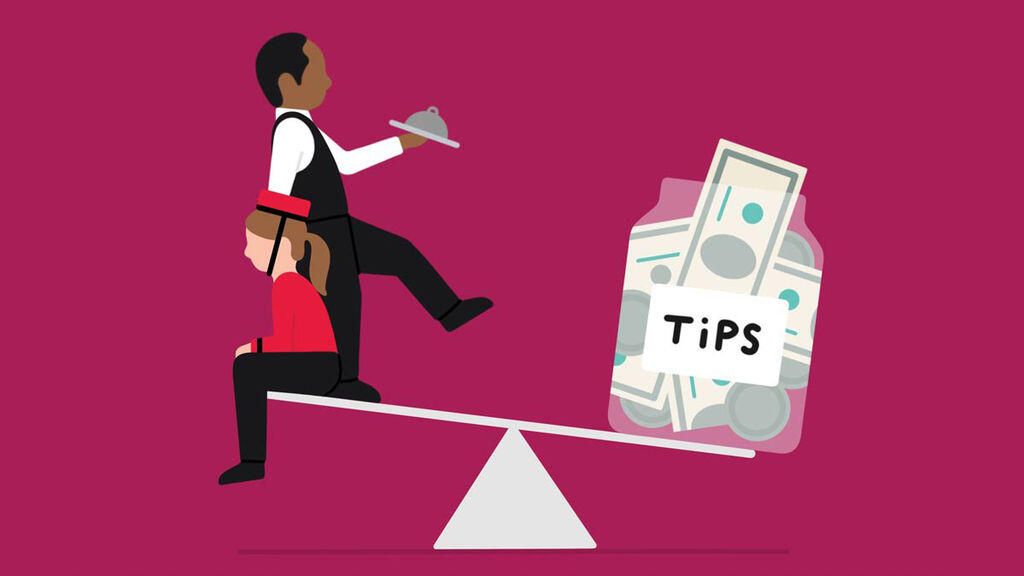
Tipping Culture in Vietnam: A Comprehensive A to Z Guide for Travelers
- on Mar 3, 2026 By: Thai An Le
Unlike the clear-cut, almost mandatory practice in many Western countries, tipping culture in Vietnam is a subtler, more complex story. Do you have to tip in Vietnam? No, tipping is completely voluntary, not expected. It's not simply an extra amount of money paid for service, but rather an art of social interaction, expressing the understanding and heart of the giver as well as the joy of the receiver. Whether you're a traveller or even a Vietnamese person, sometimes we still feel confused: Should I tip? How much is enough? And how should I tip appropriately? This article will be the most detailed guide, decoding every aspect of tipping culture in Vietnam to help you feel confident and graceful in every situation.
1. What is tipping? Its origin and meaning in Vietnam
Tipping is an additional amount of money that customers pay beyond the service bill to express satisfaction and gratitude for the quality of service. The term "tip" originates in Western countries, but "bo" comes from the French "pour boire" (for a drink), reflecting the influence of the French colonial period. In essence, tipping is a tangible way to say "thank you," to acknowledge the effort and dedication of the service provider, thereby motivating and inspiring them in their work.

However, tipping culture in Vietnam has its own unique nuances. While in the US, tipping is almost mandatory and directly calculated at 15-20% of the bill, in Vietnam, it is entirely discretionary and stems from free will. It can be a beautiful gesture that reflects the generosity and class of the consumer, but if not handled tactfully, it can easily be misunderstood as showing off or cause awkwardness for the recipient.
2. Tipping culture in Vietnam: Differences by region and type of service
The most prominent feature of tipping culture in Vietnam is its flexibility and inconsistency. According to a survey, up to 70% of Vietnamese people do not have a habit of tipping or feel pressured when the issue is mentioned. This shows that tipping hasn't truly taken root in the consciousness of the majority, especially in budget-friendly services.
- High-end segment: In upscale restaurants and 5-star hotels, tipping has become more common. Many places apply a policy of adding a service charge of 5-15% directly to the bill. However, customers can still tip staff directly if they are truly satisfied.
- Budget segment: Conversely, at street-side eateries and casual drink stalls, tipping is very rare. Sometimes, offering a tip in these places might even cause awkwardness or embarrassment for the seller, as they are not accustomed to it.
- Regional differences: Perceptions about tipping can sometimes vary among people from different regions, but generally, the idea of "tipping is discretionary" remains dominant.
.jpg)
Another interesting point is how tips are shared. Unlike in many Western countries like Sweden, where tips are pooled and divided equally among all staff on shift, in Vietnam, the most common principle is "finders keepers." The waiter directly serving the table receives the tip from the customer, and they usually keep the entire amount, without sharing with the kitchen or other departments. This can create some unfairness, but serves as direct motivation for those interacting with customers.
3. Tipping guide for travellers: Who to tip, how much to tip, and how to tip?
This is the most important part, providing detailed answers to practical situations anyone might encounter.
At restaurants and eateries
- Upscale restaurants: If the bill does not already include a service charge, you should tip around 5-10% of the total bill if you are satisfied with the service. You can leave cash on the table or tuck it inside the bill holder.
- Local eateries, street food: Not mandatory. A nice gesture is to round up the bill (e.g., if the bill is 82,000 VND, you can leave 85,000 VND or 90,000 VND and tell them to keep the change) or leave a few thousand dong in change.
- Delivery staff: A small tip of around 10,000 VND - 20,000 VND is a huge morale boost for delivery people, especially in harsh weather conditions.

At hotels
- Bellman: Around 20,000 VND - 50,000 VND per piece of luggage assisted.
- Housekeeping: These are the people who work behind the scenes. A small tip of around 20,000 VND - 50,000 VND per day, left in an envelope or on the table with a thank-you note, will make them very happy.
- Concierge: If they help you successfully book a tour, reserve a restaurant, or resolve a specific issue, a tip of 50,000 VND - 100,000 VND or more is well-deserved.
For tour guides and drivers
- Tour guide: These are the people who accompany you and shape the quality of your trip. The standard tip for a day tour is around 100,000 VND - 200,000 VND per person for group tours, and potentially higher (10-15% of the tour cost) for private tours.
- Private driver: If you have a dedicated driver accompanying your group, you should tip about half of what you give the guide, i.e., 50,000 VND - 100,000 VND per day.
- Taxi/Ride-hailing drivers: Usually, you can round up the fare on the meter. For example, if the meter shows 94,000 VND, you can give 100,000 VND and tell them to keep it. For longer trips or if the driver helps you with heavy luggage, tipping an extra 10-15% is appreciated.
4. 5 Golden rules for smart and subtle tipping
It's not just about the amount of money; how you tip is the most important thing. Here are the golden rules to help you become a sophisticated and classy guest.
- Tip in cash and in local currency (VND): Always have small denominations like 10,000 VND, 20,000 VND, and 50,000 VND ready in your wallet. Tipping in foreign currency can be inconvenient as the recipient may find it difficult to exchange and use.
- Check the bill before tipping: Many upscale restaurants and hotels already include a "service charge" in the bill. If it's already included, you can consider not tipping extra, or tip a small amount if the service was truly outstanding.
- Tip with a positive attitude: A friendly smile and a sincere "Thank you" accompanying the tip will double its value. Avoid an attitude of condescension, throwing money on the table, or acting superior. Make eye contact with the server and hand over the money with both hands if possible.
- Be subtle and discreet: Don't flaunt the fact that you are tipping. For housekeeping, leave the money in an envelope or tucked under a pillow with a small note saying "Thank you." For waitstaff, tuck the tip into the bill folder instead of handing it directly in a crowded place.
- When in Rome, do as the Romans do: Observe how the locals behave. At a humble sidewalk coffee stall, instead of leaving a tip (which might cause awkwardness), a sincere compliment like "Your coffee is really good, ma'am/sir!" can sometimes be even more effective.
5. The future of tipping culture in Vietnam
With the strong growth of tourism and international integration, tipping culture in Vietnam is gradually changing. Young people and those working in the service industry are becoming more open to tipping. The trend of tipping is no longer limited to cash; food delivery and ride-hailing apps have built-in tipping functions, making it easier and more common.
However, it will be a long time before tipping becomes a true "culture" that is uniform across the country. Controversial stories about "mandatory tip pooling" or "pressuring for tips" still occasionally occur, highlighting the sensitivity of the issue. The most important thing remains mutual respect between the service provider and the customer.
Conclusion
Tipping culture in Vietnam is a multi-colored picture, blending Eastern tradition and Western modernity. It is not a rigid rule, but an art of flexible interaction. Understanding the basic principles, knowing the reference tip levels, and especially tipping with sincerity and a positive attitude, you will not only show yourself to be a civilized and sophisticated traveller but also contribute to spreading positive values, connecting people on your journey to explore the beautiful S-shaped country.
If you're eager to discover more ways to travel like a local and uncover the hidden soul of Vietnam, let Authentik Vietnam be your companion.
FAQs
1. Am I required to tip in Vietnam?
No. Tipping in Vietnam is completely voluntary, not mandatory. This is a major difference from countries like the US. You should only tip when you are genuinely satisfied with the quality of service. However, in some cases, such as upscale restaurants that already include a "service charge" on the bill, you don't need to tip extra.
2. What if I don't have small change to tip?
This is a very common situation. The best way is to proactively prepare small denomination bills (10,000 VND, 20,000 VND, 50,000 VND) in advance. You can get small change from the hotel reception desk, banks, or convenience stores. If you truly don't have small change, rounding up the bill when paying (e.g., 177,000 VND to 180,000 VND) is also a subtle way to tip.
3. Is it okay to tip in USD or other foreign currencies?
Not recommended. Although staff at some large hotels or luxury tourist areas might accept USD, it's best and most polite to tip in Vietnamese Dong (VND). The recipient will have difficulty exchanging foreign currency for Vietnamese money to use in their daily life. Tipping in local currency shows respect and tact.
4. Should I tip the owner of a street food stall?
Generally, it's not necessary. At street food stalls or budget eateries, tipping is not a habit. The owner is usually the one cooking and serving directly, and they don't expect this extra money. A compliment on the delicious food and a cheerful attitude when paying the exact amount are what they appreciate most.
5. How can I tip hotel housekeeping staff politely?
This is a small art. You should leave the tip in an envelope (you can ask the reception for one) or place it on the table, tucked under a pillow, along with a handwritten note saying "Thank you." Avoid leaving money conspicuously on the bed or floor, as it could be misunderstood or make the staff too shy to take it. Tip daily rather than at the end of your stay to ensure it goes to the person who actually cleaned your room each day.
6. Is the "service charge" on the bill the same as a tip?
Yes and no. Essentially, it's a fee collected by the restaurant to compensate the staff. However, in practice, not all of this fee necessarily goes directly to the frontline service staff. Therefore, if the service is truly excellent, you can still tip a small amount in cash directly to your waiter as a personal thank you.
7. Should I tip through apps (Grab, Be, ShopeeFood) or in cash?
Both ways are fine. Tipping through the app is convenient, fast, and transparent. However, tipping directly with cash often holds greater sentimental value for the worker, as they receive it immediately without waiting for the app's payment cycle (which can sometimes take several days or a week). If you have cash, prioritize tipping directly.
8. If I'm travelling in a large group, how should we tip appropriately?
Typically, restaurants automatically add a service charge for large groups (usually 8 or more people). Check the bill carefully. If a service charge is already included, you may not need to tip extra. If it's not included, the group can pool a tip (around 5-10% of the total bill) and have one representative give it to the main server.
Related Articles:
Best Time to Visit Vietnam: Detailed Monthly Weather Guide by Region
Power Plug Adapter for Vietnam: Plug Types, Voltage and What Travellers Should Know
What is the Best 15-Day Vietnam Itinerary? Top Things to Do & Tour Ideas
References:
Scenic Wine Tours in Tuscany. (n.d.). Tipping [Image]. Scenic Wine Tours in Tuscany. https://www.scenicwinetoursintuscany.com/wp-content/uploads/2019/08/Tipping.jpg
Tip in Vietnam (tip jar) [Image]. (n.d.). https://cdn.prod.website-files.com/68351c7d8ce00affa6514169/6845e7af796f97ea8bfe075b_tip_in_vietnam_tip_jar.avif
Tipping in Vietnamese restaurant [Image]. (n.d.). https://cdn.prod.website-files.com/68351c7d8ce00affa6514169/6845e8454b4e7f1492af7cc2_tipping-in-vietnamese-restaurant.avif
Pinterest. (n.d.). Image from Pinterest [Image]. https://i.pinimg.com/1200x/b8/bf/17/b8bf17b54a9d8a806669fe5640958419.jpg
Share


Comment
Other Blog





Categories
Latest News


on 12 Jun, 2019




MichaelGuiffSH
on Oct 8, 2026BetongameCZ
on Sep 24, 2026Langsweirt Galliane
on Sep 21, 2026Victoria Duncan
on Sep 1, 2026Kaushik Ghosh
on Aug 30, 2026