 Español
 Français
.png "Sung Village: Discover the Living Heritage of the Dao Tien People")
Sung Village: Discover the Living Heritage of the Dao Tien People
- on Jun 22, 2026 By: Thai An Le
Nestled in the mountains of Da Bac District, Hoa Binh Province, Sung Village is one of northern Vietnam's most authentic community-based tourism destinations. Home to the Dao Tien ethnic group, the village offers visitors a unique opportunity to discover traditions that have been preserved for generations.
While many travelers visit Sung village for its peaceful landscapes and traditional stilt houses, the true highlight lies in its living cultural heritage. Here, visitors can learn about traditional Dó paper making, discover the ancient Dao Nom script, and experience cultural performances that continue to play an important role in community life.
Discover the Ancient Writing System of the Dao People
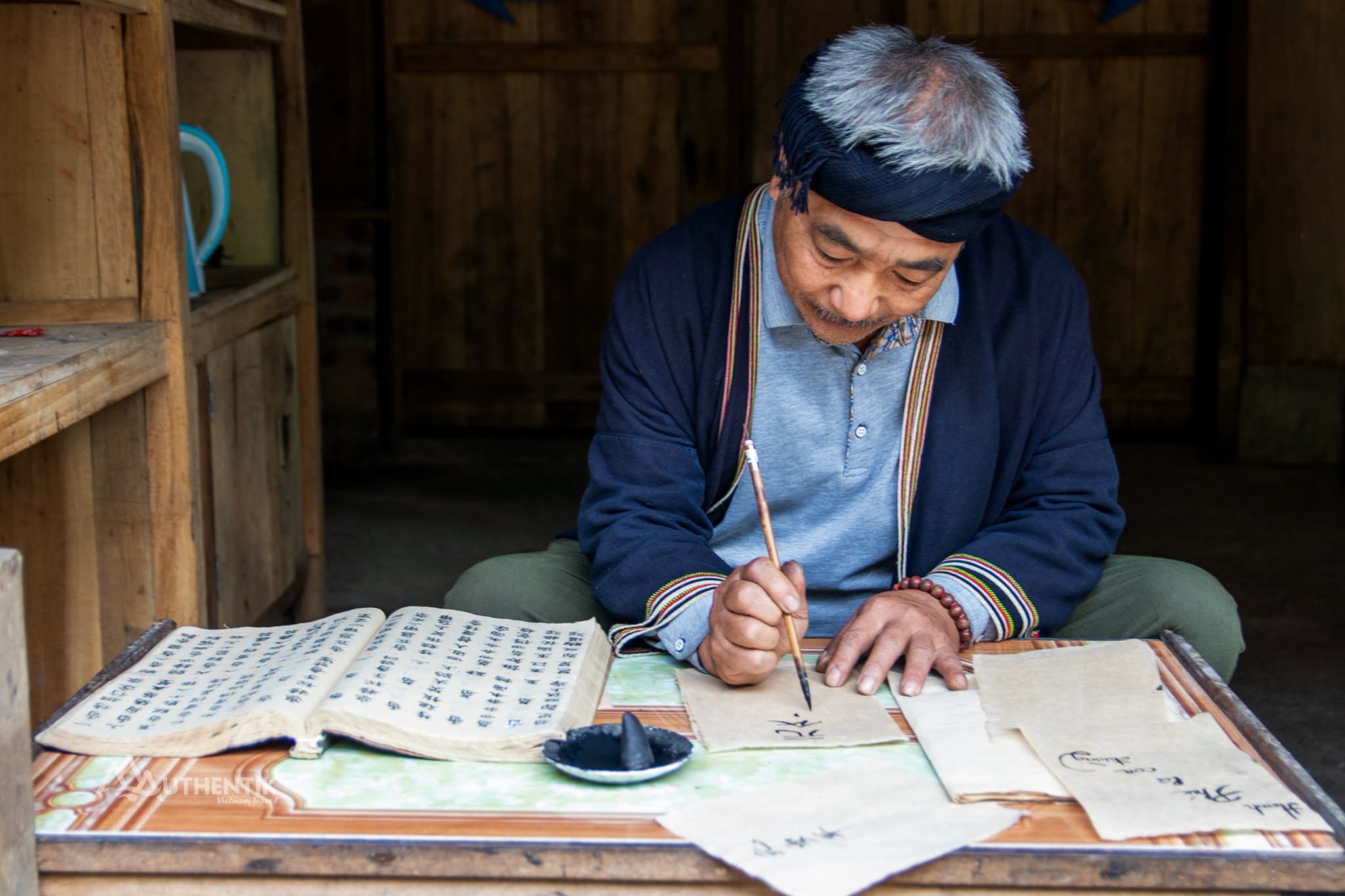 For centuries, the Dao Tien people have used Dao Nom script to record religious texts, family genealogies, folk songs, and traditional knowledge.
Unlike the Vietnamese alphabet used today, Dao Nom is a traditional writing system developed and preserved within Dao communities. These handwritten documents contain valuable information about local history, customs, beliefs, and ancestral teachings.
Today, only a limited number of elders and cultural practitioners can read and write the script fluently. As a result, preserving Dao Nom has become an important cultural mission for the community.
Visitors to Sung village have the opportunity to meet local artisans and elders who continue to practice this tradition. Watching the careful brushstrokes appear on handmade paper offers a fascinating glimpse into a heritage that remains alive today.
Traditional Dó Paper Making: A Craft Passed Down Through Generations
The preservation of Dao Nom script is closely linked to another remarkable tradition: Dó paper making.
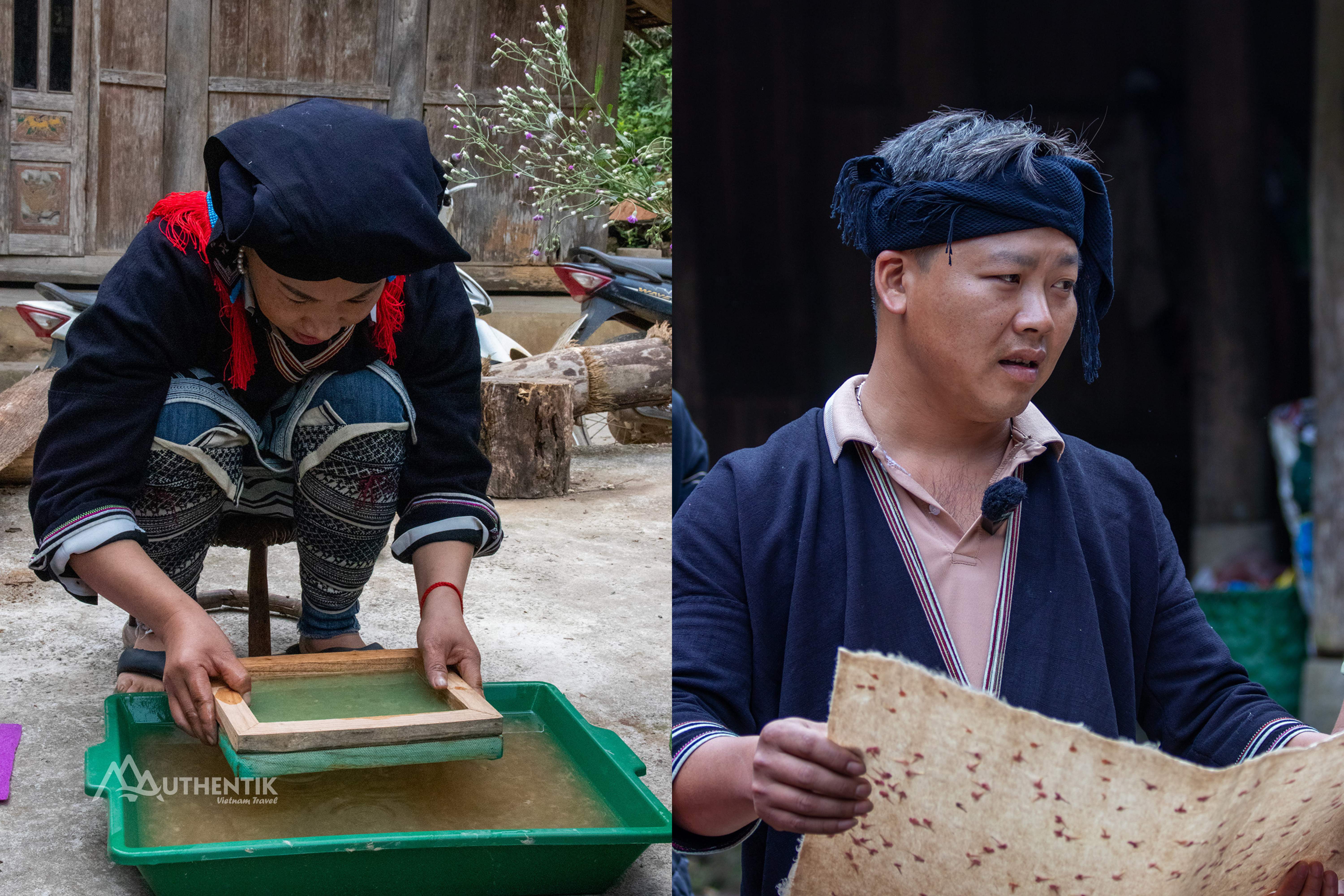
For generations, the Dao Tien people in Sung village have produced paper entirely by hand using the bark of the dó tree, a native species found in the surrounding forests.
The production process is both labor-intensive and highly skilled. After harvesting the bark, villagers soak it in lime water for several months before pounding and refining the fibers. The pulp is then filtered, poured into wooden frames, pressed, and dried naturally.
Every step requires patience and precision. Even a small mistake can affect the quality of the finished paper.
The result is a durable, lightweight paper that can last for hundreds of years without significant deterioration. Because it contains no industrial chemicals, the paper is particularly well suited for preserving important cultural documents.
More Than Paper: A Sacred Element of Dao Culture
For the Dao Tien people, Dó paper is much more than a writing material.
According to local elders, Dó paper plays an essential role in many important ceremonies, including initiation rituals, weddings, funerals, ancestor worship ceremonies, and traditional festivals.
Religious books and ceremonial texts are traditionally written on handmade paper using Dao Nom characters.
.png)
These documents help preserve ancestral knowledge and strengthen the connection between past and present generations. For many community members, Dó paper represents an important symbol of cultural identity and continuity.
A Hands-On Cultural Experience for Travelers
.png)
One of the most rewarding aspects of visiting Sung Village is the opportunity to actively participate in local traditions.
Travelers can observe the Dó paper-making process, learn about the meaning of Dao Nom characters, and even try writing simple characters themselves under the guidance of local community members.
These experiences allow visitors to move beyond sightseeing and gain a deeper understanding of the cultural values that shape daily life in the village.
For travelers seeking authentic cultural experiences in Vietnam, Sung village offers a rare opportunity to connect directly with local culture.
Traditional Performances and Community Celebrations
.png) Cultural discovery in Sung village continues after sunset.
Cultural discovery in Sung village continues after sunset.
Visitors can join local families for evenings featuring traditional Dao Tien music, folk dances, and community performances. Dressed in colorful traditional costumes, villagers perform dances that reflect their history, beliefs, and way of life.
These performances are not created solely for tourism. They remain an important part of community celebrations and cultural transmission.
Sharing these moments with local residents helps visitors better understand the richness and vitality of Dao culture.
Why Visit Sung Village?
.png)
In a rapidly changing world, places where traditional culture remains part of everyday life are becoming increasingly rare.
Sung Village stands out as a destination where visitors can discover not only beautiful mountain landscapes but also living traditions that continue to be practiced by the local community.
From learning about Dao Nom script and traditional Dó paper making to enjoying authentic cultural performances and warm hospitality, a visit to Sung village offers an enriching cultural experience unlike any other in northern Vietnam.
Conclusion
In a world where many traditional practices are gradually disappearing, Sung Village offers something increasingly rare: the opportunity to experience a culture that is still part of everyday life.
Visitors can learn about Dao Nom script, discover the art of traditional Dó paper making, join local cultural activities, and spend time with the Dao Tien community.
More than a sightseeing destination, Xom Sung invites travelers to slow down, connect with local people, and gain a deeper understanding of one of Vietnam's lesser-known cultural traditions.
At Authentik Vietnam, we believe the most memorable journeys are those that create meaningful connections between travelers and local communities. Sung Village is one of those special places where culture is not displayed behind glass, it is lived, shared, and celebrated every day.
FAQs
Where is Sung Village located?
Xom Sung is a small Dao Tien village in Cao Son Commune, Da Bac District, Hoa Binh Province, approximately 100 km from Hanoi. Surrounded by mountains and forests, it is known for its authentic community-based tourism experiences and rich cultural heritage.
What is Dao Nom script?
Dao Nom script is a traditional writing system used by the Dao people to record religious texts, family genealogies, folk songs, and ancestral knowledge. It plays an important role in preserving the cultural identity of Dao communities.
What is Dó paper?
Dó paper is a traditional handmade paper made from the bark of the dó tree. It is highly durable, can last for hundreds of years, and has long been used for writing, religious texts, and cultural documents.
Can visitors try making Dó paper in Sung Village?
Yes. Visitors can learn about the traditional papermaking process and, depending on local activities and availability, may have the opportunity to observe or participate in certain stages of Dó paper production.
Can visitors learn Dao Nom writing in Sung Village?
Visitors can meet local artisans and elders who preserve the tradition of Dao Nom writing. Some cultural experiences may include introductions to Dao Nom characters and their meanings.
What cultural activities can visitors experience in Sung Village?
In addition to learning about Dó paper and Dao Nom script, visitors can enjoy traditional Dao Tien music, folk dances, community performances, local cuisine, and authentic interactions with local families.
When is the best time to visit Sung Village?
Sung Village can be visited throughout the year. Spring and autumn are particularly pleasant thanks to mild weather and beautiful mountain scenery, making them ideal seasons for cultural discovery and outdoor activities.
Related Articles:
Visit Mai Chau in 2 or 3 days, what to see and do?
Hoa Binh, Vietnam among World’s Top 71 Most stunning destinations in the world
Explore the Charm of Da Bac: A Hidden Gem in Hoa Binh Vietnam
Share


.png&description=Sung%20Village:%20Discover%20the%20Living%20Heritage%20of%20the%20Dao%20Tien%20People)


Comment
Other Blog




.jpg)
Categories
Latest News


on 12 Jun, 2019




MichaelGuiffSH
on Oct 8, 2026BetongameCZ
on Sep 24, 2026Langsweirt Galliane
on Sep 21, 2026Victoria Duncan
on Sep 1, 2026Kaushik Ghosh
on Aug 30, 2026