 Español
 Français
The Gia-rai Funerary House and Their Beliefs About Death in Vietnam’s Central Highlands
- on Feb 24, 2026 By: Thai An Le
In Vietnam’s Central Highlands, the Gia-rai funerary house is not merely a burial structure. It represents a profound spiritual worldview shaped by centuries of indigenous belief.
For the Gia-rai people, death is not an ending. It is a transition, a journey from the world of the living to the realm of ancestors. The funerary house, built during the Leaving the Grave ceremony, marks the final farewell between the living and the dead, symbolizing release, renewal, and the eternal cycle of rebirth.
Understanding the Gia-rai funerary house means understanding how this ethnic community perceives life, death, and spiritual continuity.
.JPG)
What Is the Gia-rai Funerary House?
The Gia-rai funerary house (Nhà mồ Gia Rai) is constructed during the Pơ Thi ritual, known as the Leaving the Grave ceremony. This ceremony is the final ritual separating the deceased from the living world.
Before this ceremony takes place, the family continues to care for the deceased’s spirit. According to Gia-rai beliefs, all beings possess a soul. When a person dies, their soul becomes a spirit. Family members bring food and offerings to the grave daily, symbolically “feeding” the spirit.
Only after leaving the Grave ceremony can the soul fully depart to the ancestral world, ending all ties with the living.
Gia-rai Beliefs About Death and Rebirth
The Gia-rai beliefs about death are deeply rooted in animism, the belief that all things possess a soul.
For the Gia-rai people:
- Death is a transformation, not annihilation
- The spirit joins the ancestors after the ritual
- The soul may eventually return through reincarnation
After a spiritual process within what they call the “village of spirits,” the deceased may be reborn into human life again. This circular view of existence explains why the funerary house is filled with symbols of fertility and regeneration.
.JPG)
The Wooden Statues: Symbols of Life and Fertility
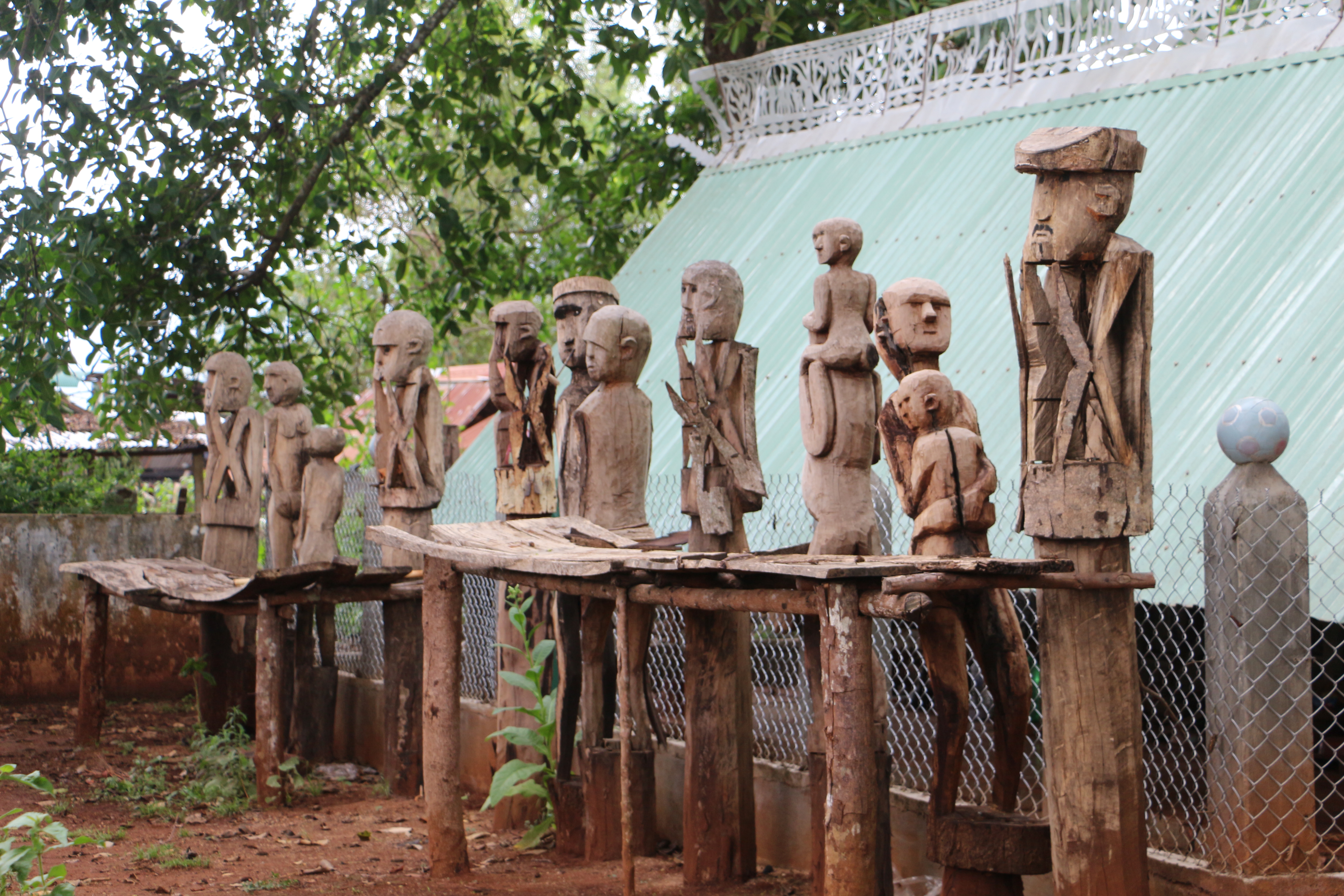
One of the most distinctive features of the Gia-rai funerary house is the wooden statues carved around it.
Different Gia-rai sub-groups create funerary houses in different architectural styles:
- Jrai Mơthur in Ayun Pa build structures resembling large haystacks
- Jrai Hđrung in Pleiku design tomb houses that evoke the tall communal rong house
- Jrai Arap construct elongated tomb houses surrounded by numerous statues
.JPG)
The statues, carved with axes, chisels, and knives, depict:
- Mourning figures covering their faces
- Mothers holding children
- Pregnant women
- Men and women in intimate poses
- Infants and symbolic fertility figures
These carvings are not meant to shock. They represent fertility, continuity, and the belief in rebirth. They affirm that life continues beyond physical death.
The funerary house becomes a symbolic “village of the dead,” created collectively by family members and skilled Jrai artisans.
Architecture and Ritual Details
The roof of the Gia-rai funerary house is made from wooden planks and covered with bamboo panels. Traditional red pigments decorate the structure with motifs representing:
- Gong performances
- Drum beating
- Xoang dance
- Elephants and birds
- Scenes from the Leaving the Grave ceremony
Inside the funerary house, everyday objects are placed carefully:
- Baskets
- Bowls
- Ceramic jars
- Tools
These items prepare the deceased for a complete life in the ancestral world.
After the ceremony concludes, the house is left to nature. It is no longer maintained. Over time, it decays and returns to the earth — mirroring the cycle of life itself.
A Reconstructed Gia-rai Funerary House in Hanoi
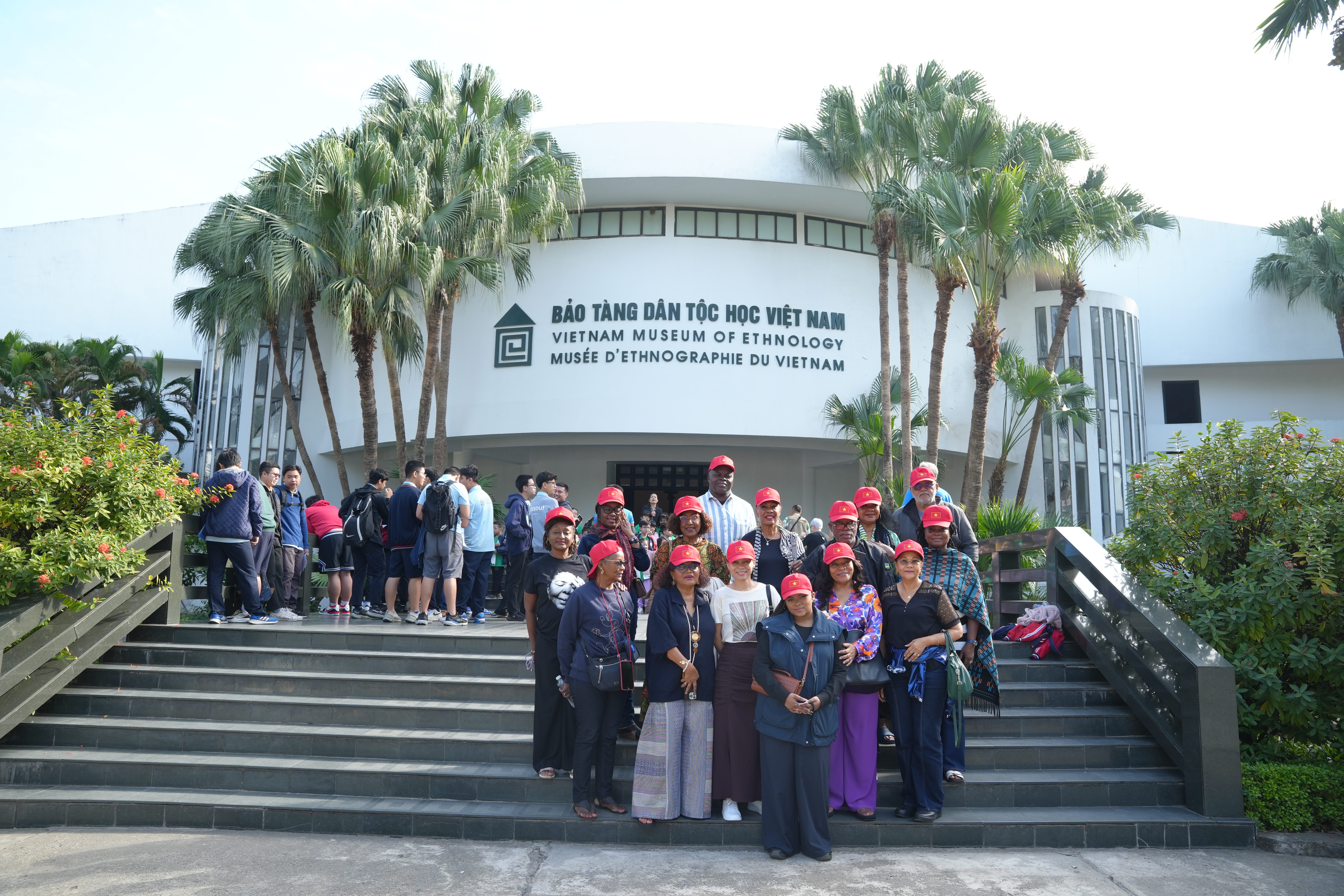
Visitors can see a reconstructed Gia-rai funerary house at the Vietnam Museum of Ethnology in Hanoi. The structure was built in 1998 by five Jrai Arap men from Mrông Ngọ village in Gia Lai Province, following traditional methods.
In its original village context, such a funerary house could serve as the burial place for up to 30 individuals and would be surrounded by a fence of carved wooden statues.
This reconstruction provides valuable insight into Gia-rai spiritual life and artistic expression.
Why the Gia-rai Funerary House Matters Today
The Gia-rai funerary house is more than a cultural artifact. It reflects:
- A holistic worldview connecting humans, nature, and spirits
- A philosophy of acceptance and release
- A powerful artistic tradition rooted in community craftsmanship
In a rapidly modernizing Vietnam, preserving the knowledge of the Gia-rai funerary house helps protect intangible cultural heritage and deepens our understanding of indigenous perspectives on life and death.
Frequently Asked Questions
What is the Gia-rai funerary house?
The Gia-rai funerary house is a wooden tomb structure built during the Leaving the Grave ceremony, marking the final spiritual separation between the deceased and the living.
What does the Leaving the Grave ceremony mean?
It is the last ritual performed for the deceased, allowing the soul to join the ancestors and ending the family’s obligation to care for the spirit.
Why are there fertility statues around the tomb house?
The statues symbolize life, rebirth, and the belief that death is part of a continuous cycle of existence.
Can tourists visit a Gia-rai funerary house?
Yes. Visitors may see reconstructed examples at museums such as the Vietnam Museum of Ethnology in Hanoi. In the Central Highlands, respectful cultural visits should be arranged with local guidance.
Conclusion
.JPG) The Gia-rai funerary house stands as a powerful expression of the Gia-rai beliefs about death, a philosophy in which life does not end but transforms. Through the Leaving the Grave ceremony, the living learn to release, the spirit moves forward, and the cycle of rebirth continues.
The Gia-rai funerary house stands as a powerful expression of the Gia-rai beliefs about death, a philosophy in which life does not end but transforms. Through the Leaving the Grave ceremony, the living learn to release, the spirit moves forward, and the cycle of rebirth continues.
To witness or learn about a Gia-rai funerary house is not simply to observe a tomb. It is to encounter a worldview where death and life are inseparable, woven together in wood, ritual, and memory.
For travellers who wish to explore the cultural richness of the Central Highlands in a respectful and meaningful way, Authentik Vietnam offers carefully designed journeys that connect you with local communities and their living traditions.
Related Articles:
Vietnam Travel in March 2026: 3 Best Places to Visit & Unique Seasonal Experiences
Best Time to Visit Vietnam: A detailed weather guide
Tour 1 week in Vietnam: Good deals for a 7-day tour in Vietnam
Share


Comment
Other Blog


Categories
Latest News


on 12 Jun, 2019




BetongameCZ
on Sep 24, 2026Langsweirt Galliane
on Sep 21, 2026Victoria Duncan
on Sep 1, 2026Kaushik Ghosh
on Aug 30, 2026Philo Tran
on Jun 15, 2026