 Español
 Français
Exploring Lung Tam Linen Village: The 20-Step Heritage of H'Mong Hand Weaving in Ha Giang
- on Feb 13, 2026 By: Thai An Le
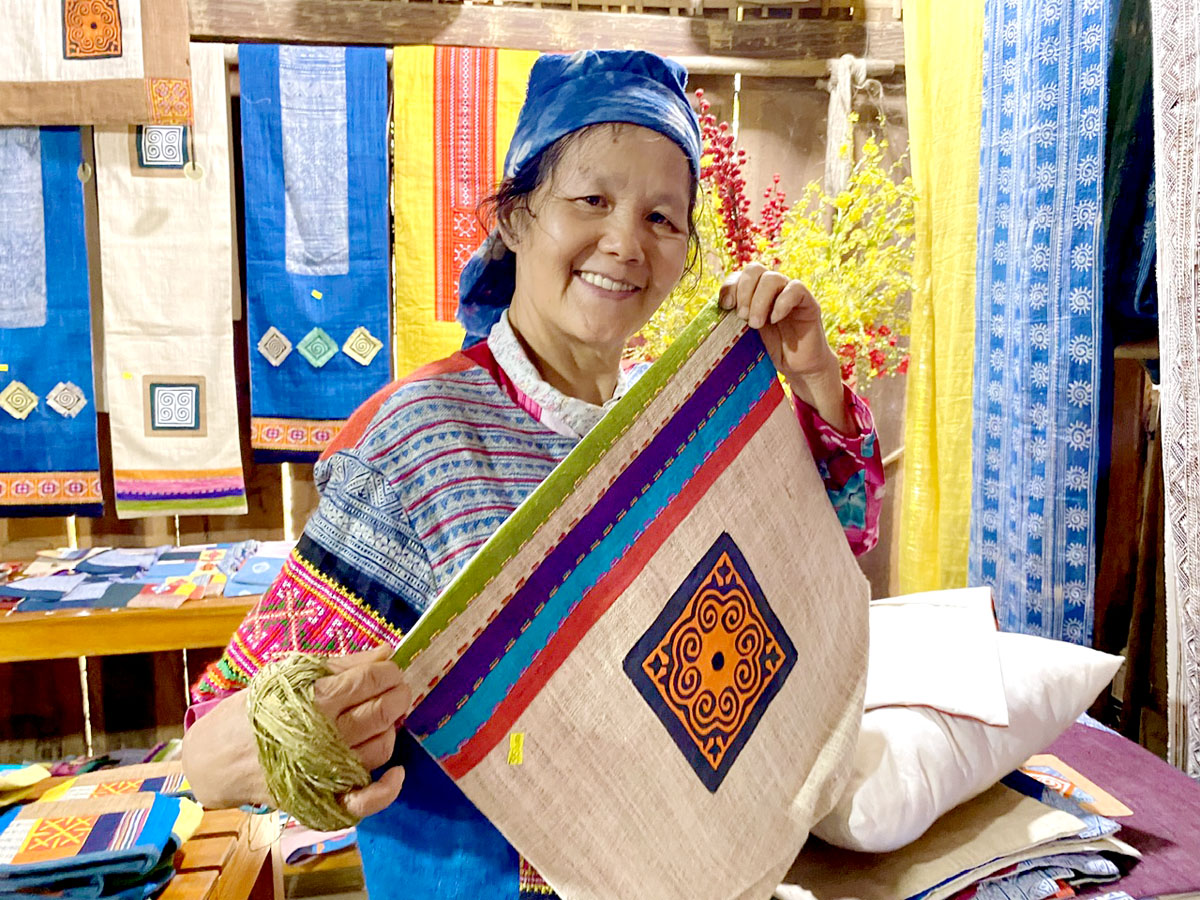
Nestled in the limestone valley of the Dong Van Karst Plateau, Lung Tam Linen Village (Lung Tam Commune, Quan Ba District, Ha Giang) has long been the cradle preserving one of the oldest traditional crafts of the H'Mong people. Far more than a livelihood, every handwoven linen fabric here is an epic poem of patience, dexterity, and the soul of highland women. So what exactly makes the Lung Tam brocade brand so captivating?
Where is Lung Tam Linen Village? The Woman Who "Revived" an Ancient Craft
Location: Lung Tam Commune, Quan Ba District, approximately 30km from Ha Giang City center.
Central Figure: Mrs. Vang Thi Mai. In 1999, she founded the Brocade Weaving Cooperative, providing sustainable livelihoods for 200+ local women and preventing this traditional craft from disappearing forever.
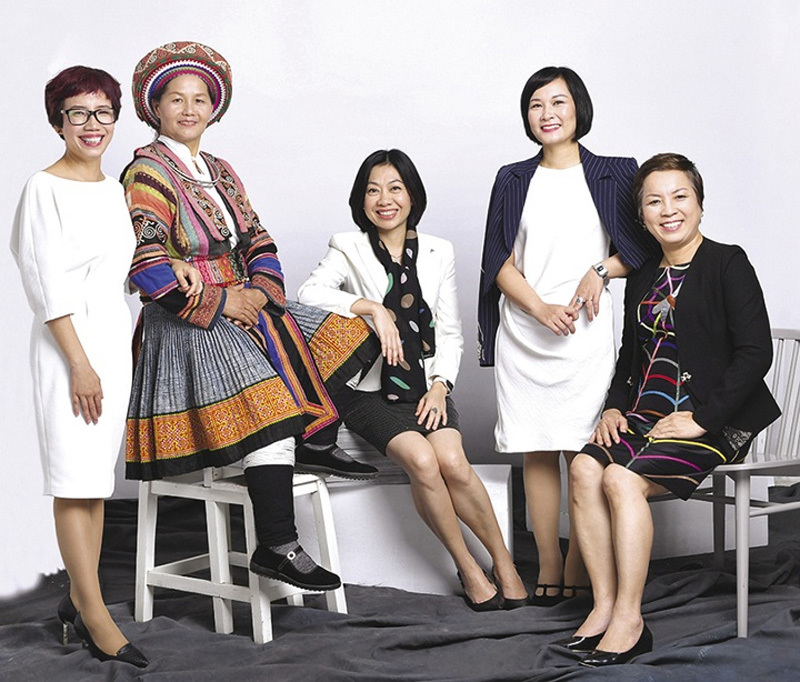
Humanitarian Value: Linen weaving is the measure of a woman's virtue. H'Mong girls as young as 13 years old must learn to spin flax and weave their own wedding dresses as gifts for their mothers-in-law.
The 20-Step Process – Creating "Mountain Silk" from Rocky Land
Phase 1: From Stalk to Supple Threads
Step 1 – Harvesting & Stripping
Flax plants mature after six months. Women harvest them, remove the leaves (which are used as organic fertilizer), and dry the stalks in the mountain sun. Each stem is then stripped by hand, one by one, to extract the raw fibres.
Step 2 – Pounding in Stone Mortars
Fibres are placed into large stone mortars and pounded with heavy wooden pestles for approximately 40 minutes. This breaks down rigid structures, transforming brittle plant material into workable softness.
Step 3 – Connecting Fibres (The Art of Invisible Knots)
This is where true mastery reveals itself. Women splice individual fibre lengths together using only their fingertips. The goal? Zero visible joints. A perfectly connected fibre should feel continuous, as if the flax never ended.
Step 4 – Spinning into Yarn
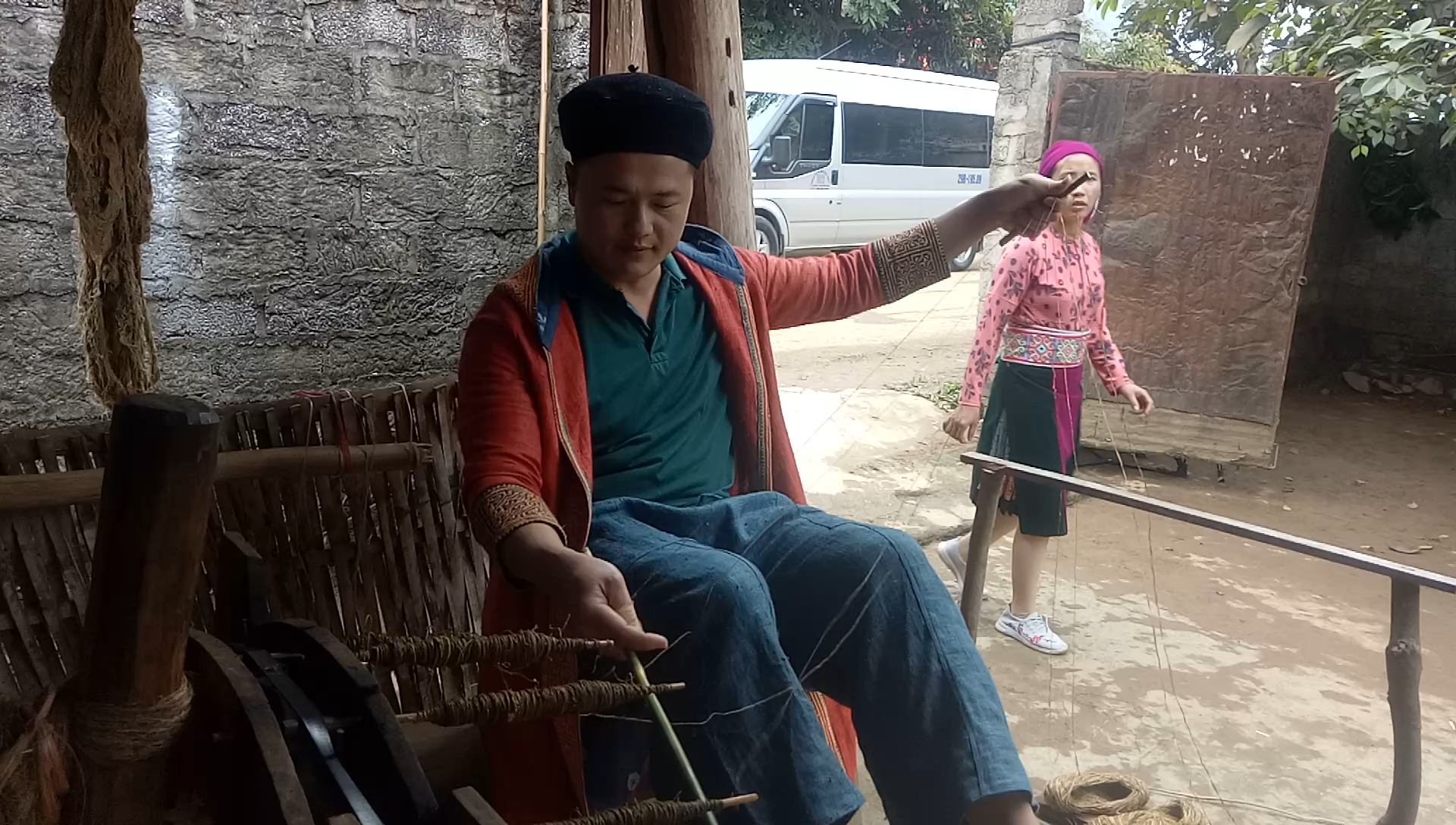
Using simple handheld spindles or floor-mounted spinning wheels, fibres are twisted into continuous linen threads. The motion combines foot coordination and hand dexterity – a rhythmic dance perfected over decades.
Step 5 – Creating 2-3kg Yarn Rolls
 Using bamboo supports outdoors, women stretch and connect fibres until each roll reaches 2-3 kilograms of continuous thread.
Step 6 – Boiling with Ash Water (4-5 Times)
Yarn is boiled in water mixed with wood ash – a traditional alkali treatment. Repeated four to five times, this process whitens fibres, removes impurities, and strengthens tensile durability.
Step 7 – Washing & Sun-Drying
Clean water rinses away ash residue. Yarn bathes in Ha Giang's generous sunlight, naturally bleached by UV rays.
Step 8 – Separating Fibres
Still-wet threads are carefully separated to prevent sticking. Each strand must maintain individual integrity.
Step 9 – Softening Between Rollers
Yarn balls are rolled between wooden blocks – a back-and-forth rocking motion that further softens and conditions threads for weaving.
Step 10 – Stretching to 200-Meter Lengths
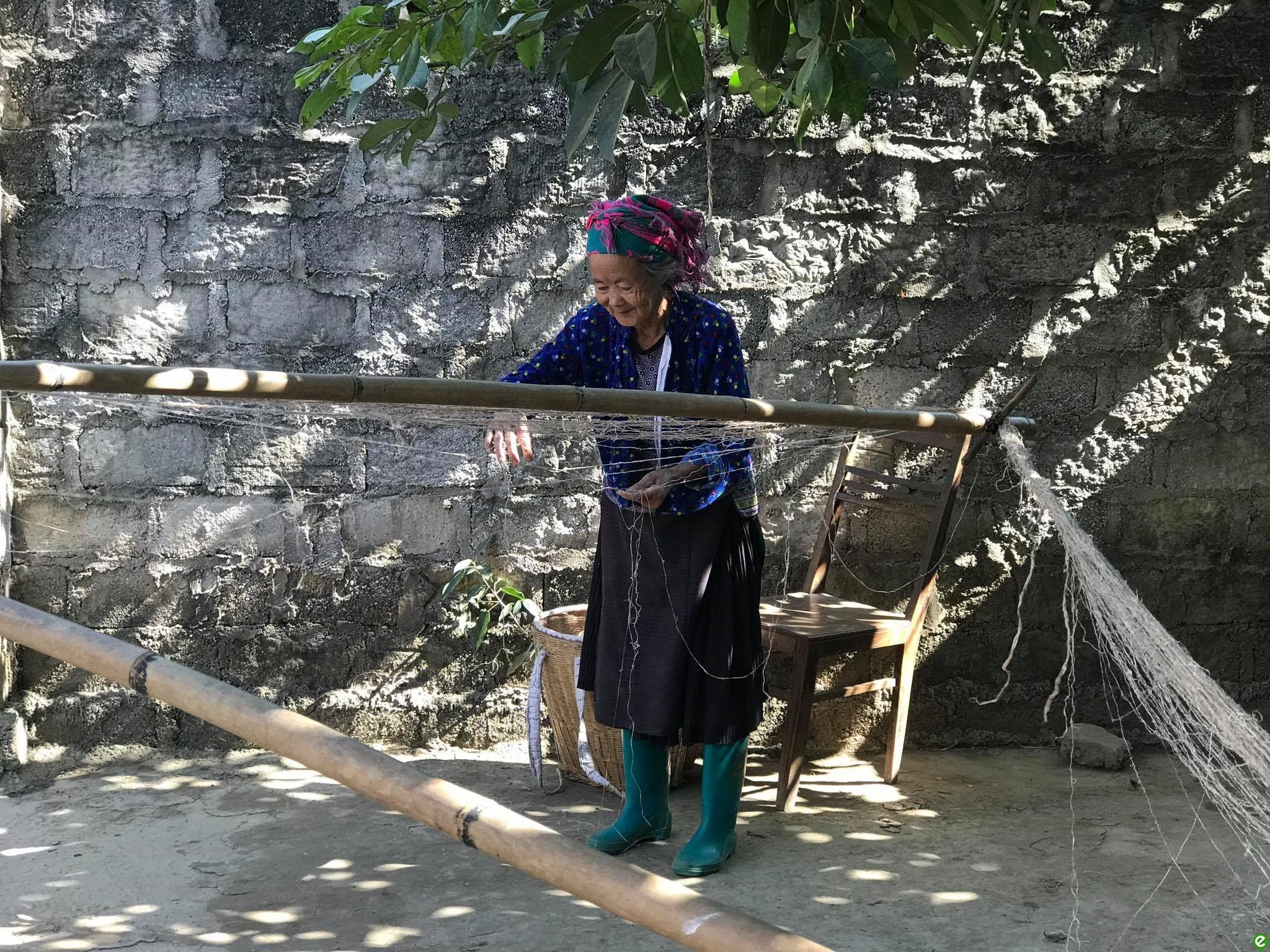
Returning to bamboo supports, artisans connect multiple segments until single thread lengths reach an astonishing 200 meters each.
Phase 2: Preparing the Loom
Step 11 – Complex Warping
This is the mathematical heart of weaving. Threads are arranged into complex, ordered rows on large wooden frames – meticulously counted and positioned to receive the weft. One mistake here compromises the entire textile.
Step 12 – Weaving (8-10 Meters Daily)
At back-strap looms, women sit for endless hours. One end anchors to the house pillar, the other wraps around the weaver's waist. Shuttles pass left to right, right to left—eight to ten meters of fabric – each weaver, each day.
Step 13 – Cutting Fabric
Completed fabric is cut into practical 10-12 meter lengths, ready for washing and finishing.
Phase 3: Natural Dyeing – Colours from the Forest
Step 14 – Initial Washing
Freshly woven fabric is washed to remove weaving residue.
Step 15 – Sun Bleaching
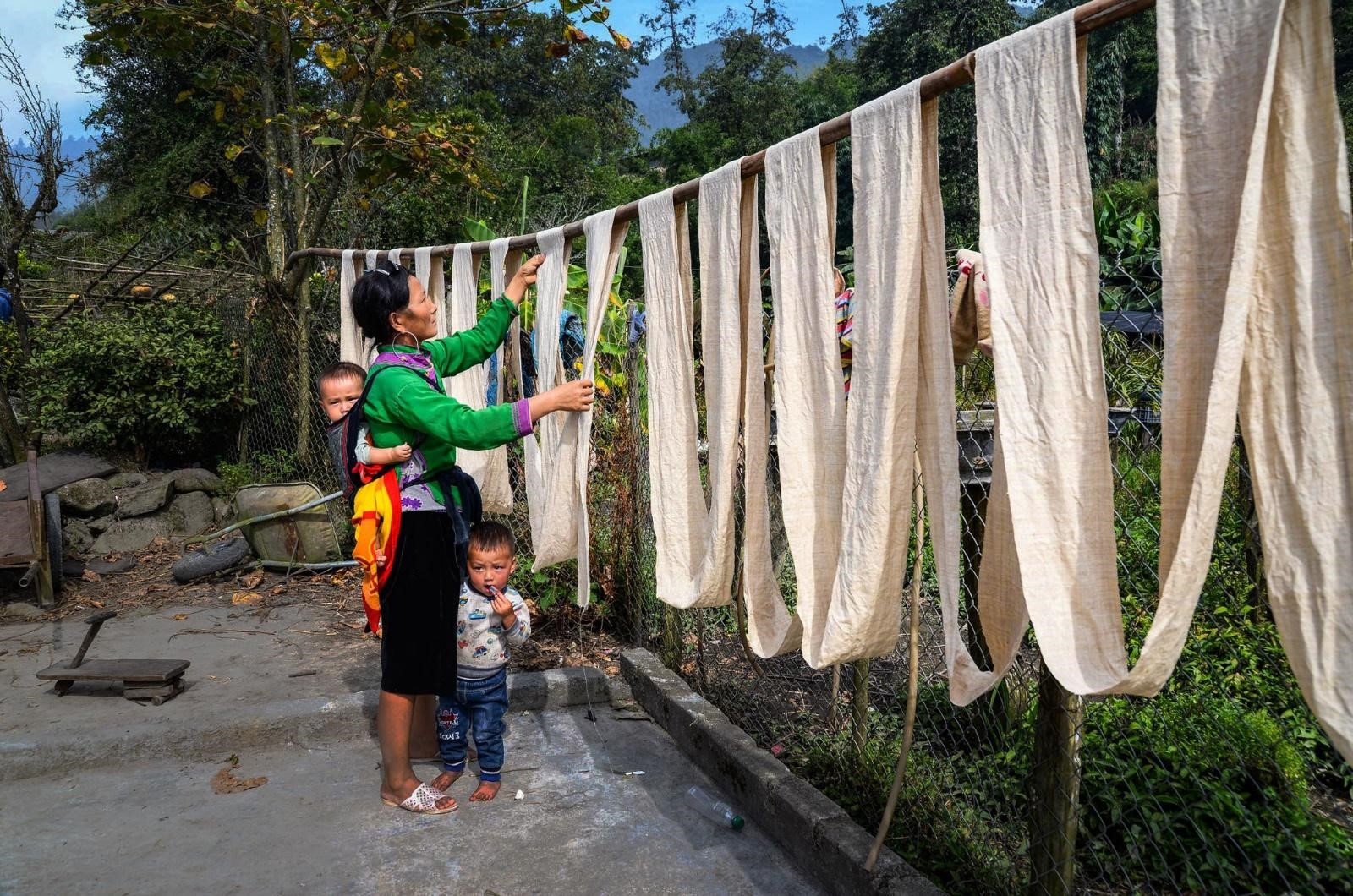
Repeated sun exposure gradually whitens natural linen to creamy ivory tones.
Step 16 – Preparing Seven Natural Colours
- Indigo/black – fermented indigo leaves
- Yellow – turmeric
- Orange – wood shavings + turmeric
- Brown – tree bark
- Red – local leaves
- Purple – indigo + red
- Green – yellow over indigo
Step 17 – Boiling & Steam Fixing (4-5 Times Each)
Fabric is submerged in dye baths, boiled, washed, and dried – repeated four to five times per colour. Steam treatments are applied one to three times to lock pigments permanently into fibres.
Step 18 – Final Washing & Drying
Dyed fabric receives one final purification before finishing.
Weather Determines Quality:
Local artisans note that dyeing success depends heavily on sky conditions. Sunny weather completes dyeing in 3-4 days. Rainy seasons extend this to several months – a testament to nature's partnership in every piece.
Phase 4: Finishing – Where Fabric Becomes Art
Step 19 – Stone Rolling (The Signature Lung Tam Softness)
This iconic image defines Lung Tam linen.
Fabric is tightly rolled around wooden cylinders, placed beneath massive flat rocks. Women stand upon these stones, shifting weight side to side, rolling cylinders back and forth. The immense pressure compresses, flattens, and miraculously softens the coarse linen into a fluid, almost silky textile.
Step 20 – Cutting, Ironing, Sewing, Embellishing
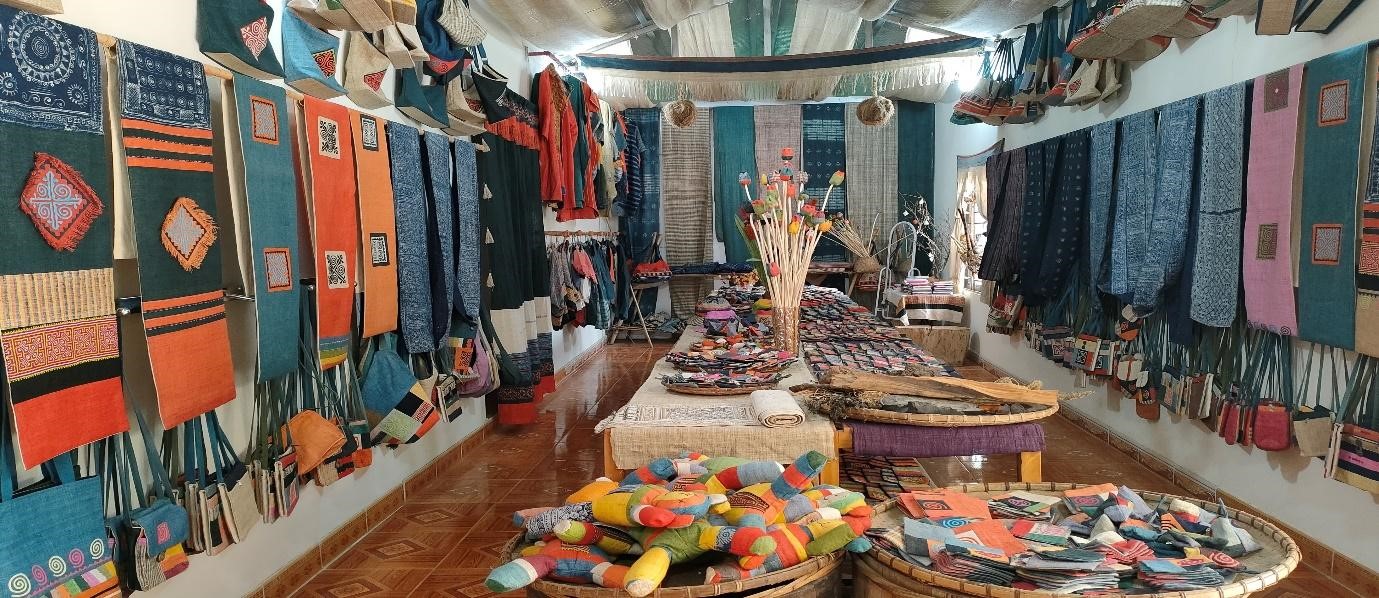
The final transformation:
• Cutting: Precise patterns emerge
• Ironing: Professional finishing
• Interfacing: Structural support where needed
• Sewing: Garments take shape
• Decorating: Embroidery, appliqué, beadwork
Lung Tam Products – From Village to the World
Product Range:
- Traditional dresses and shirts
- Scarves and shawls
- Handbags and backpacks
- Brocade paintings
- Souvenirs and home decor
Global Achievement:
Exported to over 20 countries, including the USA, Japan, France, and beyond.
Modern Applications:
Lung Tam linen is now used for curtains, bedding, and premium textiles in luxury resorts across Vietnam.
Conclusion
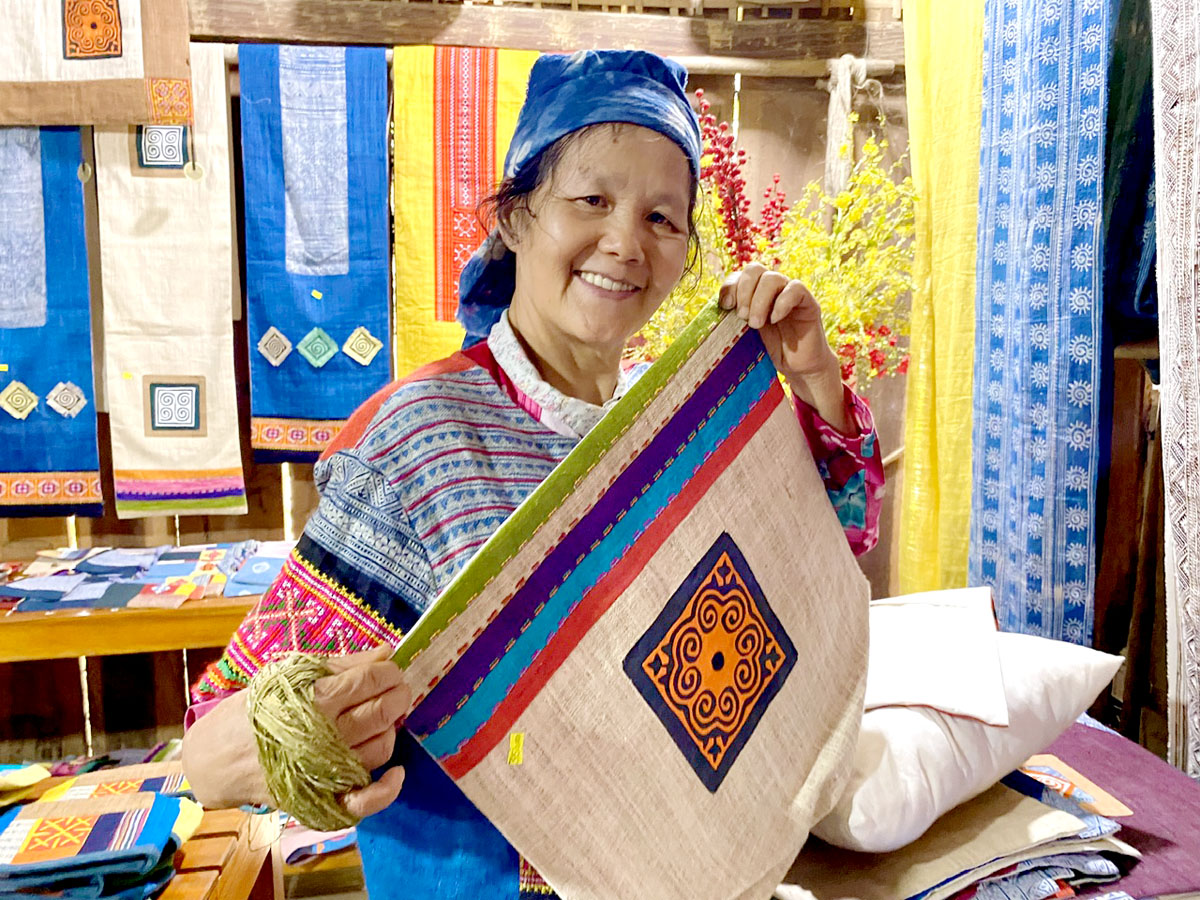
Lung Tam linen weaving is not merely a cultural heritage, it is living proof of the H'Mong people's cultural resilience in the age of industrialization. Every finished product is more than just fabric. It is the "soul" of the mountains, the breath of the stone, and the quiet perseverance of highland women who refuse to let their ancestors' stories fade.
For travellers seeking authentic encounters with Vietnam's living heritage, Authentik Vietnam Travel offers immersive journeys to Lung Tam village, where you can meet the weavers, touch the linen, and witness this 20-step miracle unfold before your eyes.
FAQ
Q1: Does Lung Tam linen fabric fade?
A: No. The fabric is dyed with natural indigo leaves, boiled and colour-set 4-5 times, ensuring extremely durable, long-lasting colours.
Q2: Is Lung Tam linen fabric expensive?
A: Given that a single piece of fabric requires 3-4 months and 20 meticulous steps to complete, prices range from 300,000 – 2,000,000 VND depending on the product.
Q3: Can I visit Lung Tam Linen Village?
A: Absolutely. Lung Tam is located on the Ha Giang – Quan Ba route, about 30km from Ha Giang city. Visitors can watch artisans at work, try the back-strap loom themselves, and buy directly from the cooperative. Authentik Vietnam Travel offers guided visits that include meaningful interactions with the weavers.
Q4: How long does it take to make one linen sheet?
A: From harvesting flax to the final stitch, a single sheet takes 3 to 4 months. This includes 20 handmade steps – each performed with generations of inherited knowledge.
Q5: What makes Lung Tam linen different from other Vietnamese textiles?
A: Three things:
• The full 20-step process is done entirely in one village
• Beeswax resist drawing – a signature H'Mong technique
• Stone rolling finish – which transforms coarse linen into silky, lustrous fabric found nowhere else
Related Articles:
Ha Giang Loop 4 days: Complete itinerary & Must-see places
Visit Ha Giang during the buckwheat season
Share


Comment
Other Blog


Categories
Latest News


on 12 Jun, 2019




MichaelGuiffSH
on Oct 8, 2026BetongameCZ
on Sep 24, 2026Langsweirt Galliane
on Sep 21, 2026Victoria Duncan
on Sep 1, 2026Kaushik Ghosh
on Aug 30, 2026