 Español
 Français
.png "Kien Trung Palace: The Lost Royal Residence Reborn in Hue")
Kien Trung Palace: The Lost Royal Residence Reborn in Hue
- on Jul 14, 2026 By: Thai An Le
When I first walked into Hue’s Imperial City and saw Kien Trung Palace standing proudly among the historic buildings, I found it hard to imagine that this colorful royal residence had once been reduced to ruins.
For nearly eight decades, Kien Trung Palace disappeared from the daily landscape of Hue. A place that once witnessed the private lives, decisions, and final years of Vietnam’s last emperors became a forgotten memory.
Today, after years of careful restoration, Kien Trung Palace has opened its doors again, allowing visitors to discover one of the most fascinating chapters of Vietnam’s imperial history.
But this palace is not just another beautiful building in Hue. It tells a deeper story - a story about the final years of the Nguyen Dynasty, cultural transformation, war, and the effort to preserve Vietnam’s heritage.
I. The History of Kien Trung Palace: The Last Royal Residence of the Nguyen Dynasty
.png)
Located inside Hue Imperial City, Kien Trung Palace was built between 1921 and 1923 during the reign of Emperor Khai Dinh, the 12th emperor of the Nguyen Dynasty.
Unlike many earlier royal buildings in Hue, which were designed mainly for ceremonies and court affairs, Kien Trung Palace served as both a working space and a private royal residence.
The palace was closely connected with the lives of Vietnam’s last two emperors: Emperor Khai Dinh and Emperor Bao Dai.
During the final years of his life, Emperor Khai Dinh moved to Kien Trung Palace, where he lived, worked, and spent his final days before passing away in 1925.
Later, Emperor Bao Dai chose Kien Trung Palace as one of his main residences. Together with Empress Nam Phuong and their children, he spent time here as Vietnam entered one of the most dramatic periods of its modern history.
Walking through the palace today, I find it fascinating to think that these rooms once witnessed not only royal ceremonies but also the everyday life of Vietnam’s last imperial family.
II. Why Was Kien Trung Palace Destroyed?
The history of Kien Trung Palace is also a story of loss.
During the First Indochina War, many historic buildings in Hue suffered severe damage. In 1947, Kien Trung Palace was almost completely destroyed, leaving only ruins behind.
For decades, the palace existed only through old photographs, historical records, and memories of a disappearing royal era.
Standing in front of the restored palace today, it is difficult to imagine that this elegant building was once almost completely lost.
Its restoration represents more than rebuilding a structure, it represents the effort to reconnect modern visitors with an important part of Vietnam’s history.
III. The Unique Architecture of Kien Trung Palace
One of the reasons Kien Trung Palace is so special is its unusual architectural style.
When I first looked at the building, I immediately noticed that it felt different from many traditional palaces inside Hue Imperial City.
Instead of following only traditional Vietnamese wooden architecture, Kien Trung Palace reflects the cultural changes of the early 20th century, when Vietnam was experiencing stronger international influences.
European Influences in a Vietnamese Royal Palace
.png)
The palace combines elements inspired by European architecture, including French architectural influences and Renaissance-inspired details.
Its symmetrical design, columns, balconies, large windows, and decorative elements create a Western appearance.
However, the palace still maintains its Vietnamese royal identity through traditional symbols and decorations.
This combination creates a fascinating example of cultural exchange, a place where European influences meet Vietnamese imperial traditions.
The Art of Ceramic Mosaic: The Details That Bring Kien Trung Palace to Life
For me, one of the most impressive parts of Kien Trung Palace is the incredible decorative craftsmanship.
The exterior features intricate ceramic mosaic decorations, a traditional artistic technique commonly found in Hue’s royal architecture.
Looking closely at the walls, visitors can see carefully arranged ceramic pieces forming colorful patterns, including traditional motifs such as dragons, flowers, and symbolic designs.
These details are not simply decoration. They represent the patience, creativity, and skill of Vietnamese artisans.
Under sunlight, the colorful surfaces create a unique visual effect, making the palace appear different throughout the day.
Inside Kien Trung Palace: A Glimpse Into the Lifestyle of Vietnam’s Last Emperors
.png)
Beyond its exterior beauty, Kien Trung Palace also reflects the changing lifestyle of Vietnam’s final royal family.
Compared with earlier Nguyen Dynasty palaces, this residence incorporated more modern influences.
The interior design combined royal traditions with elements inspired by European lifestyles, reflecting Emperor Bao Dai’s connection with a changing world.
This was a period when Vietnam’s monarchy was no longer isolated from global influences. Kien Trung Palace became a symbol of transition, between tradition and modernity, between East and West.
IV. Kien Trung Palace Location and Visitor Information
Located inside Hue Imperial City, Kien Trung Palace is easy to include in your itinerary while exploring the former capital of Vietnam.
The palace’s registered address is 32 Dang Thai Than Street, Phu Xuan Ward, Hue City. However, visitors cannot enter directly from this address. To visit Kien Trung Palace, you need to purchase an entrance ticket to Hue Imperial City and enter through the main gate, Ngo Mon Gate, before making your way to the palace.
Kien Trung Palace is open daily from 7:30 AM to 5:30 PM, giving travelers plenty of time to explore this restored royal residence at their own pace.
V. Suggested 15-Day Vietnam Itinerary: From Northern Mountains to Hue and Central Vietnam
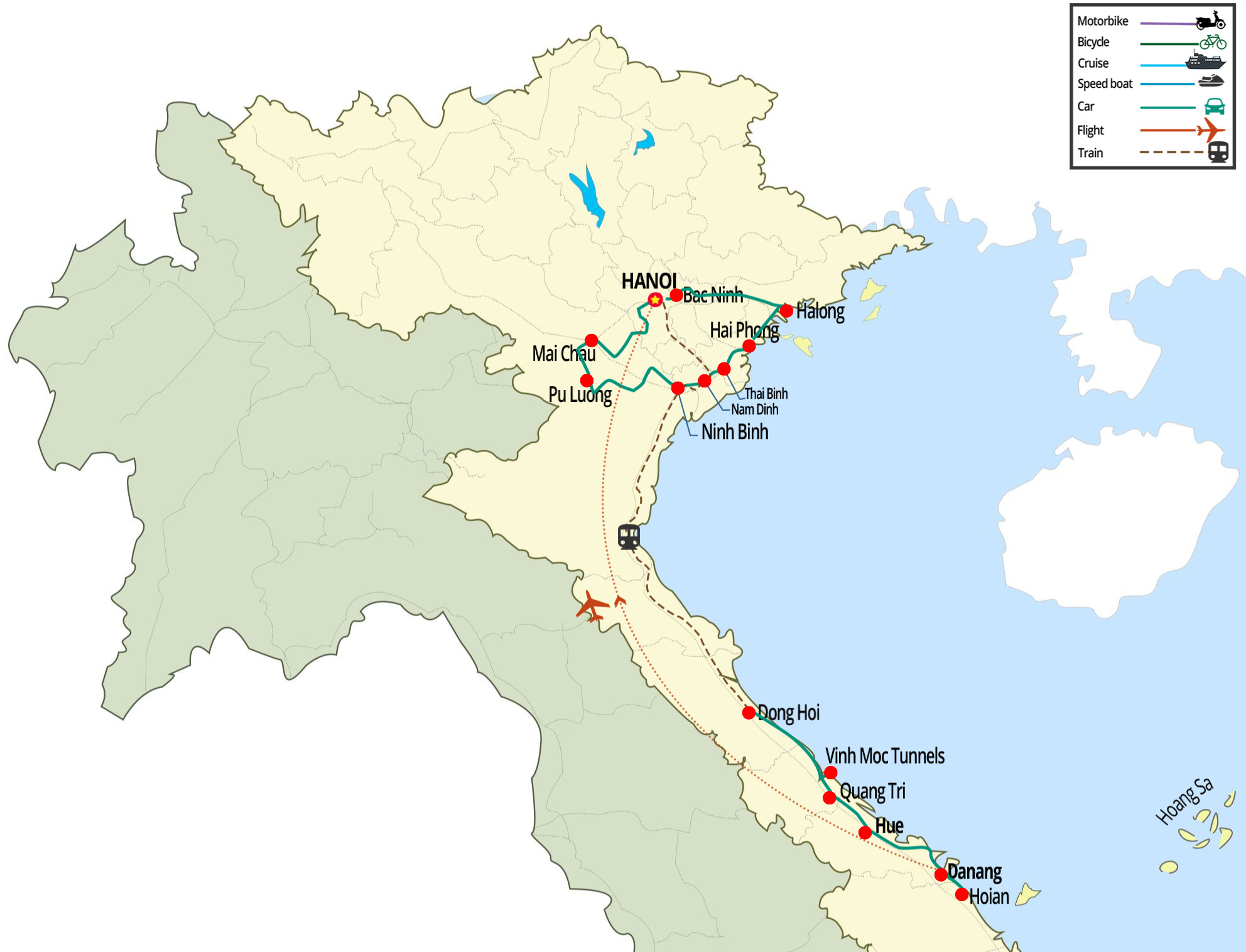
If you want to experience Kien Trung Palace as part of a deeper journey through Vietnam’s history, landscapes, and local cultures, this 15-day Vietnam itinerary combines northern mountains, UNESCO heritage sites, and central Vietnam’s hidden gems.
Best for: Adventure seekers wanting to explore Vietnam’s largest caves
Route: Hanoi – Mai Chau – Pu Luong – Ninh Binh – Halong Bay – Quang Binh – Phong Nha – Quang Tri – Hue – Da Nang – Hoi An – Hanoi
FAQs
How can I visit Kien Trung Palace?
Kien Trung Palace is located inside Hue Imperial City at 32 Dang Thai Than Street, Phu Xuan Ward, Hue City, Vietnam.
The Imperial City is open daily from 7:30 AM to 5:30 PM. The entrance ticket for international visitors is 200,000 VND per person, which is included in the Imperial City ticket. This ticket allows you to explore not only Kien Trung Palace but also other important royal landmarks, including Ngo Mon Gate, Thai Hoa Palace, and The Mieu Temple.
When was Kien Trung Palace built?
Kien Trung Palace was built between 1921 and 1923 during the reign of Emperor Khai Dinh of the Nguyen Dynasty.
Why is Kien Trung Palace famous?
Kien Trung Palace is famous for its unique combination of Vietnamese royal architecture and European influences, as well as its restoration after decades as a ruin.
Where is Kien Trung Palace located?
Kien Trung Palace is located inside Hue Imperial City, a UNESCO World Heritage Site in Hue, central Vietnam.
Who lived in Kien Trung Palace?
The palace was associated with Emperor Khai Dinh and Emperor Bao Dai, the final two emperors of the Nguyen Dynasty.
Conclusion
.png)
When I walked away from Kien Trung Palace, what stayed with me was not only its colorful architecture or impressive restoration. It was the story behind it, a royal residence that disappeared for decades and finally returned to life.
For me, this is what makes traveling through Vietnam so meaningful. The most memorable places are not always the busiest attractions, but the ones that allow us to understand the people, history, and traditions behind them.
At Authentik Vietnam, I believe that every journey should go beyond simply seeing a destination. Through our local experiences and tailor-made tours, I hope to help travelers discover the hidden stories that make Vietnam unique, from restored royal landmarks like Kien Trung Palace to the everyday cultural moments found across the country.
If you are planning your trip to Hue, I hope you will take the time to explore this remarkable palace and discover a forgotten chapter of Vietnam’s royal history.
Related Articles:
Is Hue Worth Visiting? Find Out If Vietnam's Imperial City Matches Your Travel Style
Share


.png&description=Kien%20Trung%20Palace:%20The%20Lost%20Royal%20Residence%20Reborn%20in%20Hue)


Comment
Other Blog
.png)
.png)

Categories
Latest News

on 12 Jun, 2019

.jpg)
on 26 Dec, 2017




BetongameCZ
on Sep 24, 2026Langsweirt Galliane
on Sep 21, 2026Victoria Duncan
on Sep 1, 2026Kaushik Ghosh
on Aug 30, 2026Philo Tran
on Jun 15, 2026