Español
 Français
International Flights
Our rates do not include international flights to and from your country. It is your responsibility to find the best flights based on your budget and travel dates.
Once you arrive in our destination, Authentik Vietnam will take care of visas, itineraries, transportation, domestic flights, tour guides, accommodation, and more.
How to book your international flights?
Nowadays, it is easy to find suitable flights online. Here are some suggestions:
- Flight comparison websites: Ebookers.com, Flights.com, FareCompare.com
- Local ticketing offices
Some international airports for your reference:
In Vietnam: Noi Bai Airport, Tan Son Nhat Airport, Da Nang Airport
In Cambodia: Phnom Penh Airport, Siem Reap Airport
In Laos: Vientiane Airport, Luang Prabang Airport, Pakse Airport
In Myanmar: Yangon Airport, Mandalay Airport
Read lessThe airfare may change every day. It may increase depending on availability. The earlier you book, the better rate you may get.
To plan your trip, we suggest booking your international flight first. It will then be easier for us to adjust the program accordingly to match your flight schedule.
Our high season is from October to the end of April. Avoiding travel during this period is often synonymous with saving on your budget.
Do not hesitate to use fare comparison websites to find the cheapest flights for your travel dates.
Check directly on airlines’ websites if they have any promotions for your destinations.
Read lessAll these flights are included in the trip. You do not need to book them on your own:
- We are a local travel company, so we can get these flights at a better rate.
- We can be flexible with these flights and our itineraries.
Visas and Passports
Your passport must be valid for 6 months, and there must be at least 1 blank page for a visa stamp.
Read lessA Vietnamese visa may be required depending on your nationality.
There are 3 ways to get a Vietnam visa:
Obtain a visa at the Vietnamese embassy in your country.
You can apply for a Vietnam e-visa online through the official Immigration website HERE.
Get a visa on arrival (with a visa approval letter from a travel agency).
Vietnam currently offers visa exemption for several nationalities, mostly from Europe, for stays of up to 45 days. Please check your eligibility before traveling.
Read less
Authentik Vietnam will assist you in obtaining a Vietnam visa approval letter if you choose the visa on arrival option (available in specific cases). We will only require a copy of your passport. We will send you the Vietnam visa approval letter via email.
Visa on arrival is less commonly used today. We recommend applying for an e-visa for most travelers.
You need to print this visa letter, one letter per person.
Prepare 2 passport-sized photos (it’s possible to get them once you land at the airport).
Present your visa letter when boarding.
Upon arrival at the airport, you will see the immigration office and the visa on arrival counter. Please show your passport and visa letter at the visa on arrival counter. Fill in the visa application form and get the visa stamp on your passport. The stamp fee is around 25 USD for single entry and 50 USD for multiple entry (subject to change). It will take around 30–45 minutes to process.
Process at Noi Bai airport
At the end of the corridor, turn left or right depending on the direction, you will arrive at “Cấp Thị Thực Visa – Visa application”.
Show the officer your Vietnam visa approval letter + 2 photos + passport and wait for the process to be completed.
Pay the single/multiple entry visa fee according to your request, then receive your passport with the visa stamp.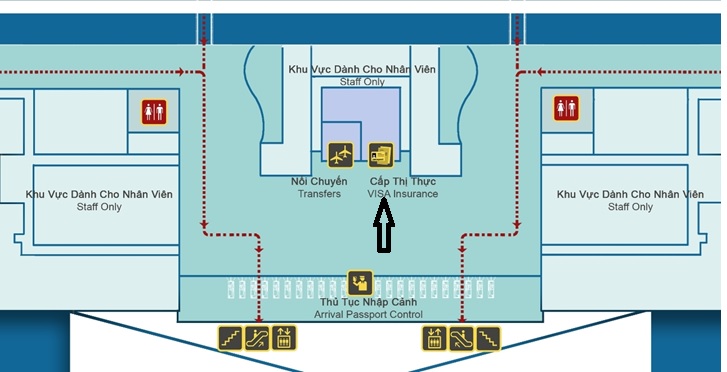
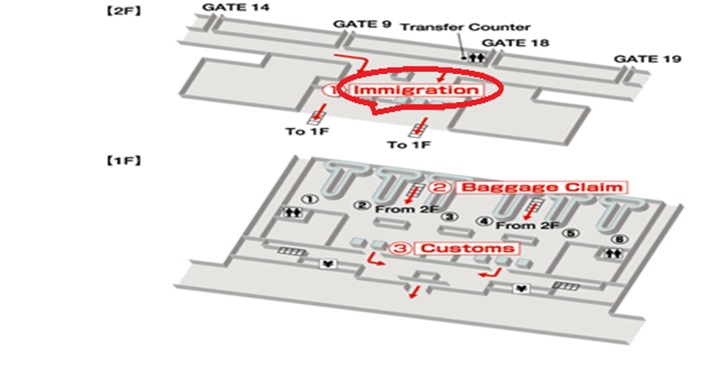
Process at Tan Son Nhat airport:
At the end of the corridor, turn left or right depending on the direction, you will arrive at “Cấp Thị Thực Visa – Landing Visa”.
Show the officer your Vietnam visa approval letter + 2 photos + passport and wait for the process to be completed.
Pay the single/multiple entry visa fee according to your request, then receive your passport with the visa stamp.
A sample of Vietnam Visa which is stamped on your passport on arrival at airport:
Your passport must be valid for at least 6 months from your arrival date.
Most nationalities can obtain a visa on arrival without preparing any documents in advance, including EU citizens, North Americans, and Australians. Some African and Middle Eastern nationalities must obtain a Laos visa before arrival.
You need: one passport-sized photo and 30–42 USD in cash for the visa processing fee (subject to change).
E-visa is also available for many nationalities, which is a convenient alternative to visa on arrival.
Read lessYour passport must be valid for at least 6 months from your arrival date and have at least 1 blank page left.
Most nationalities can obtain a visa on arrival at international airports or border crossings. The visa processing fee at the airport is usually around 30–35 USD (subject to change).
Another way is to obtain an e‑visa online on the official government website: https://www.evisa.gov.kh/ (fee ~30–35 USD).
Read lessBest time to travel?
Vietnam is a tropical country. It is hot and humid. Its dragon-shaped territory stretches over 1,650 km from the north to the south. With over 3,000 km of coastline along the East Sea, the climate can be very different depending on the area.
Temperature: It is hot in the south all year round, whereas “winter” only occurs in the north. Temperatures can drop to 10°C. These “cold” periods are not periodic as in other countries in Europe, America, or Australia. They depend on cold air currents from China. In general, they do not last over 15 days. Usually, the coldest period is at the end of December.
Precipitation: In the north of Vietnam (Hanoi), the rainy season lasts for 5 months, from mid-May to September. In the center of Vietnam, it occurs later and ends in November. Precipitation is even more abundant in the north.
Storms: Vietnam is one of the countries in Southeast Asia most prone to storms and flooding. Only the north and central parts are really affected by storms, which happen from August to September.
There is not really a bad time to visit Vietnam, as it may be bad in some regions, but you can still experience a radiant time in other regions.
From October to November:
This is the best time to visit Northern Vietnam. It is cool, dry, and sunny. In Central Vietnam, this is known as the end of the rainy season. There is no rain, and it is hot in Southern Vietnam at this time.
From December to the end of February:
During this period, Northern Vietnam experiences winter with mist, drizzle, humidity, and temperatures often dropping close to 10°C. The center is better with higher temperatures. However, this is the best time to visit the south, which has a temperate climate and is very pleasant.
For beach holidays, all the most beautiful beaches are in the south, where it is always hot and sunny.
For details, please have a look at: The Best Time To Visit Vietnam
Read lessLaos is a country with both a tropical and subtropical climate, featuring two main seasons:
The dry season: From October to April. The average temperature is 21°C. During November to February, it is around 25°C. However, temperatures may reach 40°C in the plains from mid-March to late April.
The rainy season: From May to September. Warm and humid winds from the south bring the monsoon. During this season, it can be difficult to move around. The temperature in Vientiane is around 30°C, and precipitation is approximately 300 mm. Occasionally, temperatures may reach up to 45°C, but this is not common. Therefore, during this season, we recommend visiting the northern region of Laos.
Read less
Cambodia is like other tropical countries, as it has two seasons. Winter is from November to March, and summer is from May to October (the monsoon season).
Winter corresponds to the “dry season,” with temperatures ranging from 25°C to 30°C. Summer is very hot, reaching up to 35°C, and is especially humid, with violent short rain showers at the end of the day. April and May are two particularly stifling months.
Read lessAll questions about the Trips | Authentik Vietnam
No vaccinations are required to visit our destinations. If you are undergoing a specific medical treatment, please bring a sufficient supply of your medication for the duration of your trip.
In general, there are many types of medicine available in pharmacies at each destination; however, it is better to bring your own. It is suggested to take: bandages, analgesic pills, antidiarrheal pills, anti-mosquito cream, sunscreen, and medicines for colds and angina.
We also recommend protecting yourself from malaria. For more information, please contact the tropical medicine department of your hospital.
Traveling to off-the-beaten-track areas requires good physical condition. For instance, a long journey on damaged roads may not be suitable for someone with a fragile back.
Read lessHere are some tips for choosing insurance during your trip.
Bank card insurance:
Insurance associated with your credit cards (Visa, Visa Premier, MasterCard, Gold) is usually not enough. The services offered vary depending on your bank.
Travel insurance:
We advise you to purchase an international health insurance policy. This second insurance can cover all your healthcare costs.
During your stay, we recommend staying in good 3+ star accommodations, which will help you avoid this nuisance. In homestays, your accommodation will include mosquito nets. If you go out after sunset, using mosquito repellent is highly recommended.
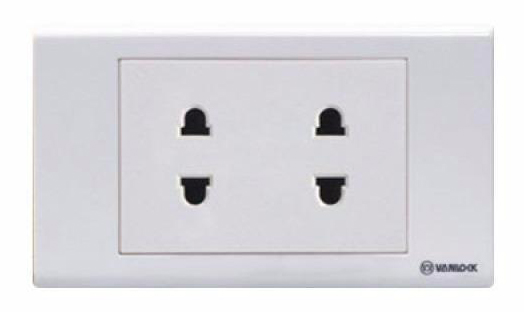
Read lessThe voltage is 220V, 50Hz. Most sockets are suitable for European electrical equipment. For travelers from the US, Australia, or Canada, you may need a plug adapter to use your devices.
Electric power may be cut without notice, especially in remote areas. Therefore, do not forget to bring your power bank and flashlight.
Please see some types of electrical outlets in the photos:


To plan your holiday in Vietnam, it is important to know the main public holidays and high seasons:
Christmas and New Year: Expats often visit Southern Vietnam and Halong Bay. Book accommodation and tours well in advance.
Lunar New Year (Tet): The most important festival. Most offices, banks, and restaurants close, and many people return to their hometowns. Travel is crowded, prices are high, and some services may be unavailable.
Hung King’s Temple Festival: Minimal disruption.
Reunification Day & May Day (30 April – 1 May): High season for local tourists, especially at beaches and Sapa. Book in advance or avoid crowded areas.
Vietnam National Day (2 September): Holiday lasts 2–3 days; popular destinations get busy. Advance booking is recommended.
Read less
Tipping is not compulsory. It depends on your satisfaction and your budget.
It is advisable not to give a very small tip; it is better to give nothing than to give an amount that seems too low.
According to Vietnamese customs, tipping is usually given to tour guides, drivers, porters, and rowers.
For tour guides: around 10–20 USD/day, depending on your satisfaction.
For drivers: slightly less than the guide’s tip.
For rowing boats or rickshaws: 1 USD per person.
The time difference is usually 4–6 hours from Europe, 10–12 hours from the United States, and 3 hours from Australia compared to Asian time zones.
Read lessThis is rare. However, it is the same as in the rest of the world. Please stay alert when walking in very touristic areas. Avoid carrying jewelry, as it may make you a target. It is better to leave your valuable belongings in the safety box at your hotel.
In recent years, there have been some bag snatching incidents from scooters in major cities, particularly in Ho Chi Minh City (Saigon). Therefore, be careful with your personal belongings when you are in big cities.
Read lessLocal currencies:
Vietnam: Vietnamese Dong (VND) – about 27,000 VND ≈ 1 USD (can vary).
Cambodia: Cambodian Riel (KHR) – the riel is pegged to the USD (~4,000 KHR ≈ 1 USD).
Laos: Lao Kip (LAK) – exchange rates vary, around 0.8 LAK ≈ 0.01 VND mid‑market rate.
You can change money at airports, banks, hotels, or currency exchange shops.
Credit cards:
Credit cards are accepted in most hotels, large restaurants, and modern stores, although cash is more common.
In Vietnam, Laos, you should exchange to local currency for most personal expenses.
In Cambodia, both the USD and the local riel are widely accepted (USD is commonly used for most transactions).
ATMs:
You can withdraw local currencies at ATMs in cities, but amounts may be limited and exchange rates follow the bank’s rate. We recommend using them mainly for urgent cases or small cash needs.
Most hotels, restaurants, and homestays offer free internet access. Wi-Fi is becoming increasingly common. Do not hesitate to ask for the Wi-Fi password.
Read lessAs in other Asian countries, the main rule is patience. Avoid raising your voice.
Respect the local culture:
Do not kiss; handshakes are common.
During meals, do not place your chopsticks vertically in the rice bowl. This resembles incense sticks at funerals and is considered a sign of death.
Dress appropriately:
Avoid wearing clothes that are too revealing or show too much skin.
Maintaining a good attitude and “saving face” is very important. Do not show anger by raising your voice, as this will make you lose face and achieve nothing. Discussions or disagreements should be handled with gentleness, mutual respect, and calmness. Criticism should be addressed with humor to avoid confrontation. If you are unsure, ask our guides or drivers for help.
Read lessTo call from your country to:
Vietnam: dial 00 + 84 + city code + number (country code: 0084)
Laos: dial 00 + 856 + city code + number (country code: 00856)
Cambodia: dial 00 + 855 + city code + number (country code: 00855)
Note: To call a cellphone number, just dial 00 + country code + number (no city code).
To call your home country:
Dial 00 + your country code + city code + number.
Most main destinations have strong cellphone signals.
We recommend turning off data roaming or mobile data once you arrive to avoid high roaming charges. This does not prevent you from contacting someone in your country or using the internet.
Tips:
Purchase a local SIM card (3G/4G/5G) at a reasonable price.
Use free Wi-Fi at hotels, restaurants, and cafés.
You can still use apps like WhatsApp, iMessage, FaceTime, and Facebook for calls and messaging.
Read less
You are travelling to tropical countries. Only northern Vietnam is cold (around 10°C), misty, and humid during winter from November to February. If you travel to northern Vietnam in winter, please bring light, warm, and waterproof clothing.
Summer (from May to September) is hot in all these countries. You can wear shorts, but make sure your outfits are appropriate when visiting monuments or sacred places.
Read lessIf you would like to bring small gifts from home, we recommend items that reflect your country, such as perfume, lipsticks, T-shirts, pens, or traditional souvenirs.
Please note that in remote or poorer areas, such as ethnic minority villages, school supplies and clothing are especially appreciated.
Read lessShare


- Create your own trip or see other travel ideas
- Design your travel plan Or View all tours